


App-facing HTTP contracts with an Echo-backed runtime for GoForj applications.


web keeps application handlers behind focused Context, Router, and middleware contracts while Echo stays at the HTTP boundary. It includes an Echo adapter, route declarations, common middleware, WebSockets, Prometheus instrumentation, handler test helpers, and source-aware route and OpenAPI indexing.
The contracts deliberately expose less than Echo. Applications can stay on the smaller surface for ordinary HTTP work and use explicit Echo escape hatches when an integration needs the underlying engine or context.
Installation
Requires Go 1.26 or newer.
go get github.com/goforj/webQuick start
package main

import (
	"fmt"
	"log"
	"net/http"

	"github.com/goforj/web"
	"github.com/goforj/web/adapter/echoweb"
	"github.com/goforj/web/webmiddleware"
)

func main() {
	adapter := echoweb.New()
	router := adapter.Router()

	router.Use(
		webmiddleware.Recover(),
		webmiddleware.RequestID(),
	)

	router.GET("/healthz", func(c web.Context) error {
		return c.Text(http.StatusOK, "ok")
	})

	router.GET("/users/:id", func(c web.Context) error {
		id := c.Param("id")
		return c.JSON(http.StatusOK, map[string]any{
			"id":   id,
			"name": fmt.Sprintf("user-%s", id),
		})
	})

	log.Fatal(http.ListenAndServe(":8080", adapter))
}
Start the server with go run ., then make requests from another shell:
$ curl -s http://localhost:8080/healthz
ok
$ curl -s http://localhost:8080/users/42
{"id":"42","name":"user-42"}
The quick start owns the http.Server directly to keep the first example small. For cancellation-aware graceful shutdown, use echoweb.NewServer.
Choose an entry point
| Start with | Use it when |
|---|---|
echoweb.New() and router.GET(...) | Routes are registered directly and your application owns the http.Server. |
web.NewRouteGroup(...) and web.RegisterRoutes(...) | Routes should be reusable declarations for reporting, indexing, or framework-managed App composition. |
echoweb.NewServer(...) | The adapter should register route groups and own graceful HTTP shutdown. |
echoweb.Wrap(engine) | An existing Echo engine needs to expose the app-facing web.Router contract. |
Package map
| Package | Purpose |
|---|---|
web | Handler, context, router, route declaration, WebSocket, and route-reporting contracts. |
adapter/echoweb | Echo adapter, native escape hatches, and server lifecycle. |
webmiddleware | Authentication, security, routing, payload, compression, timeout, proxy, and rate-limit middleware. |
webprometheus | HTTP metrics middleware, scrape handlers, and Pushgateway support. |
webindex | Source-aware route manifests, diagnostics, schemas, and OpenAPI documents. |
webtest | Lightweight contexts for isolated handler tests. |
Common workflows
The quick start above is a complete program. The following recipes are focused excerpts; complete generated programs are available in examples.
Declarative route groups
Route values keep registration data available for route reporting and source-aware tooling instead of burying every route in adapter calls.
adapter := echoweb.New()

routes := []web.Route{
	web.NewRoute(http.MethodGet, "/healthz", func(c web.Context) error {
		return c.NoContent(http.StatusNoContent)
	}),
	web.NewRoute(http.MethodGet, "/users", func(c web.Context) error {
		return c.JSON(http.StatusOK, []map[string]any{{"id": 1}})
	}),
}

group := web.NewRouteGroup("/api", routes)
if err := web.RegisterRoutes(adapter.Router(), []web.RouteGroup{group}); err != nil {
	log.Fatal(err)
}
Middleware phases
Use Pre for middleware that must change the request method or path before route matching. Method override, rewrite, and trailing-slash middleware belong in this phase. Use Use for middleware that wraps the matched request handler.
router := echoweb.New().Router()

router.Pre(
	webmiddleware.MethodOverride(),
	webmiddleware.RemoveTrailingSlash(),
)

store := webmiddleware.NewRateLimiterMemoryStore(rate.Every(time.Second))
router.Use(
	webmiddleware.Recover(),
	webmiddleware.RequestID(),
	webmiddleware.RateLimiter(store),
)
Middleware runs in registration order, so put recovery and request identity near the outside of the chain and keep a shared rate-limit store for the lifetime of the application.
Graceful server lifecycle
Server.Serve listens until its context is cancelled, then shuts down with the configured timeout.
ctx, stop := signal.NotifyContext(context.Background(), os.Interrupt, syscall.SIGTERM)
defer stop()

server, err := echoweb.NewServer(echoweb.ServerConfig{
	Addr: ":8080",
	RouteGroups: []web.RouteGroup{
		web.NewRouteGroup("/api", []web.Route{
			web.NewRoute(http.MethodGet, "/healthz", func(c web.Context) error {
				return c.NoContent(http.StatusNoContent)
			}),
		}),
	},
	ShutdownTimeout: 10 * time.Second,
})
if err != nil {
	log.Fatal(err)
}
if err := server.Serve(ctx); err != nil {
	log.Fatal(err)
}
Test a handler
webtest.NewContext runs an isolated handler without booting a router or listener. Use the Echo adapter with httptest when the route mapping itself is part of the behavior under test.
func TestHealthHandler(t *testing.T) {
	req := httptest.NewRequest(http.MethodGet, "/healthz", nil)
	rec := httptest.NewRecorder()
	ctx := webtest.NewContext(req, rec, "/healthz", nil)

	handler := func(c web.Context) error {
		return c.Text(http.StatusOK, "ok")
	}
	if err := handler(ctx); err != nil {
		t.Fatal(err)
	}
	if rec.Code != http.StatusOK {
		t.Fatalf("expected %d, got %d", http.StatusOK, rec.Code)
	}
	if rec.Body.String() != "ok" {
		t.Fatalf("expected ok, got %q", rec.Body.String())
	}
}
Expose Prometheus metrics
Use one metrics instance for both middleware and scraping. An explicit registry keeps collector ownership local to the application.
registry := prometheus.NewRegistry()
metrics := webprometheus.MustNew(webprometheus.Config{
	Namespace:  "app",
	Registerer: registry,
	Gatherer:   registry,
})

router := echoweb.New().Router()
router.Use(metrics.Middleware())
router.GET("/metrics", metrics.Handler())
router.GET("/users", func(c web.Context) error {
	return c.JSON(http.StatusOK, []map[string]any{{"id": 1}})
})
Generate a route manifest and OpenAPI document
Set RouteCompositionPath to the source file that assembles the application route groups. Scoping the index to that composition keeps unrelated fixtures and unused providers out of the published contract.
manifest, err := webindex.RunCached(context.Background(), webindex.IndexOptions{
	Root:                 ".",
	RouteCompositionPath: "internal/http/routes.go",
	OutPath:              "build/webindex.json",
	DiagnosticsPath:      "build/webindex.diagnostics.json",
	OpenAPIPath:           "build/openapi.json",
	Strict:                true,
}, "build/webindex.cache")
if err != nil {
	log.Fatal(err)
}
log.Printf("indexed %d operations", len(manifest.Operations))
RunCached reuses a content-validated analysis snapshot while artifact publication remains changed-only; use Run when persistent caching is unnecessary. Strict promotes unresolved source evidence into an error instead of publishing an ambiguous contract. The returned manifest still contains structured diagnostics for reporting.
Add a WebSocket route
WebSocket handlers use the same app-facing context plus a small connection contract.
router := echoweb.New().Router()
router.GETWS("/ws", func(c web.Context, conn web.WebSocketConn) error {
	var message map[string]any
	if err := conn.ReadJSON(&message); err != nil {
		return err
	}
	return conn.WriteJSON(map[string]any{"echo": message})
})
Echo escape hatches
Use echoweb.Wrap to adapt an existing Echo engine. Adapter.Echo, echoweb.UnwrapContext, and Context.Native expose the underlying implementation when a framework-specific integration genuinely needs it.
If an application only needs Echo and benefits from its full native API everywhere, using Echo directly is reasonable. web earns its place when the smaller handler contract, route declarations, shared middleware surface, testing helpers, metrics, or source-aware indexing are useful application boundaries.
Client IP trust
For backward compatibility, the Echo adapter initializes Echo's legacy IP extractor when an engine does not already have one. That extractor trusts forwarding headers without proxy checks, so configure it deliberately before using Context.RealIP for security, rate limiting, or auditing.
For a server reached directly by clients, use the network peer address:
adapter := echoweb.New()
adapter.Echo().IPExtractor = echo.ExtractIPDirect()
Behind a trusted proxy, configure echo.ExtractIPFromXFFHeader or echo.ExtractIPFromRealIPHeader with trust options that match the deployment, and ensure the edge proxy removes client-supplied forwarding headers before adding its own.
Request scheme and proxy trust
Echo 5.4 accepts scheme headers only from trusted peers. By default, loopback, link-local, private addresses and Unix sockets are trusted. Public clients cannot bypass HTTPSRedirect by claiming to use HTTPS.
A proxy connecting from a public address or 100.64.0.0/10 now needs explicit trust. Without it, TLS termination can cause redirect loops and suppress HSTS. Configure the actual proxy ranges through the underlying engine:
// Replace this documentation range with the proxy's actual network.
_, proxyRange, err := net.ParseCIDR("203.0.113.0/24")
if err != nil {
    return err
}
adapter := echoweb.New()
adapter.Echo().SchemeExtractor = echo.ExtractSchemeFromHeaders(echo.TrustIPRange(proxyRange))
The proxy must overwrite client-supplied X-Forwarded-Proto. Scheme trust is independent of IPExtractor. For other security behavior changes, including static paths, JSONP callbacks and method overrides, review the Echo 5.4 migration notes.
Performance
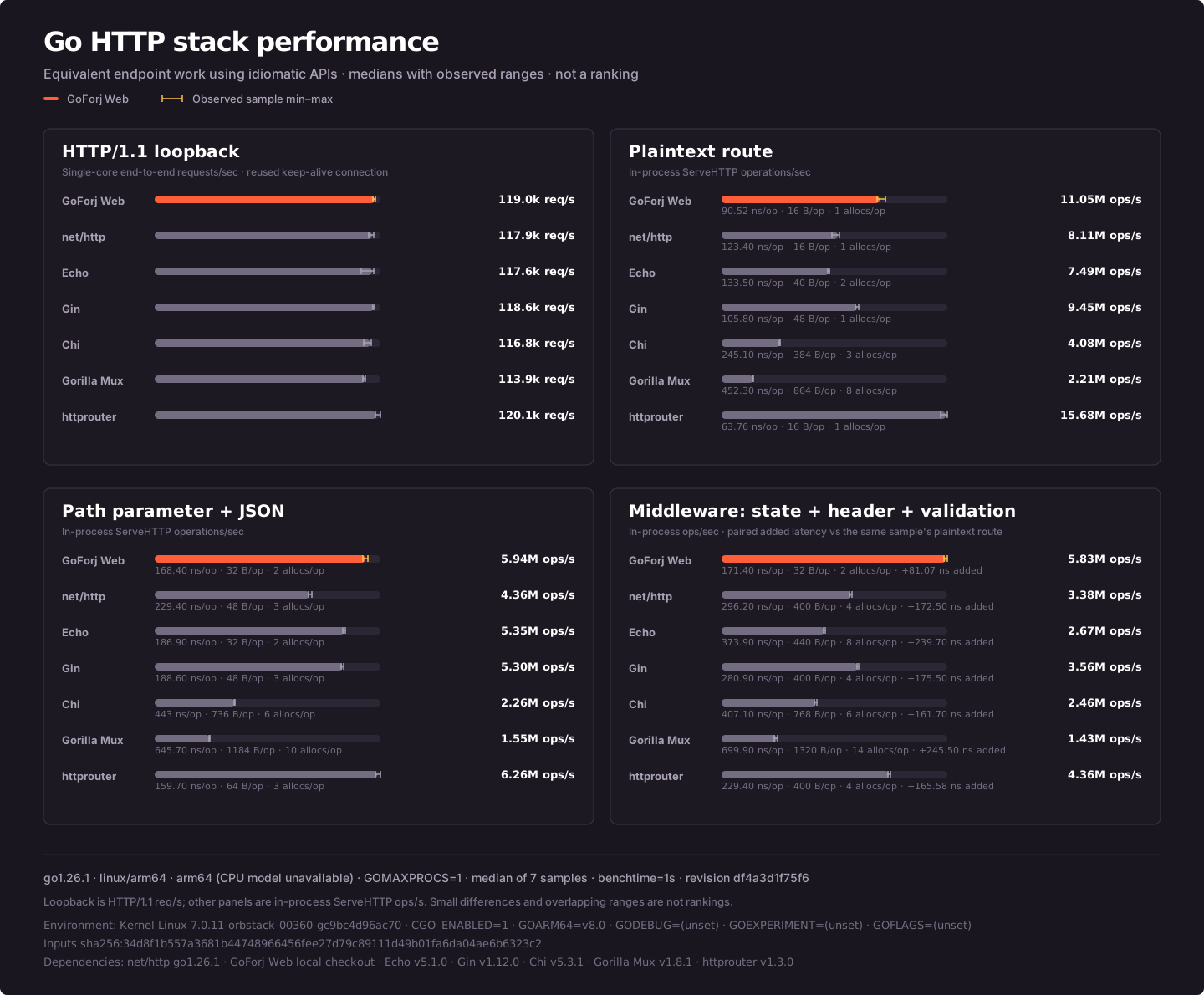
Whiskers in every panel show the observed sample minimum and maximum. The first panel measures single-core HTTP/1.1 loopback requests per second over a reused connection. The other panels measure in-process ServeHTTP operations per second, and their allocation figures cover the complete route and handler dispatch. Middleware details show the median paired latency added above the plaintext route measured in the same benchmark process. Each primary value is the median of 7 samples at 1s with GOMAXPROCS=1.
Bars are scaled independently within each panel, and small differences should not be treated as rankings. These are microbenchmarks and loopback ceilings, not production capacity forecasts.
Measured with go1.27.2 on linux/arm64 (arm64 (CPU model unavailable)), kernel Linux 7.0.14-orbstack-00380-ga7e0a2dc9535, revision bed58056e1d6. Build settings: CGO_ENABLED=1, GOARM64=v8.0, GODEBUG=(unset), GOEXPERIMENT=(unset), GOFLAGS=(unset). Benchmark inputs: sha256:1ddaf5f9fc8ff99221947f6a5630a3c4138ad88b3502f3a5c6c5e468ae7afcf5. Dependencies: net/http go1.27.2, GoForj Web local checkout, Echo v5.4.0, Gin v1.12.0, Chi v5.3.2, Gorilla Mux v1.8.1, httprouter v1.3.0.
Fiber is omitted because its fasthttp engine is not directly comparable in this shared net/http suite. See the benchmark methodology and recorded sample rows.
Regenerate the measurement and image with:
make bench-svgAPI
API Index
API Reference
Generated from public API comments and examples.
Adapter
echoweb.Adapter.Echo
Echo returns the underlying Echo engine.
adapter := echoweb.New()
fmt.Println(adapter.Echo() != nil)
// true
echoweb.Adapter.Router
Router returns the app-facing router contract.
adapter := echoweb.New()
fmt.Println(adapter.Router() != nil)
// true
echoweb.Adapter.ServeHTTP
ServeHTTP exposes the adapter as a standard http.Handler.
adapter := echoweb.New()
adapter.Router().GET("/healthz", func(c web.Context) error { return c.NoContent(http.StatusNoContent) })
rr := httptest.NewRecorder()
req := httptest.NewRequest(http.MethodGet, "/healthz", nil)
adapter.ServeHTTP(rr, req)
fmt.Println(rr.Code)
// 204
echoweb.New
New creates a new Echo-backed web adapter.
adapter := echoweb.New()
fmt.Println(adapter.Router() != nil, adapter.Echo() != nil)
// true true
echoweb.NewServer
NewServer creates an Echo-backed server from web route groups and mounts.
server, err := echoweb.NewServer(echoweb.ServerConfig{
	RouteGroups: []web.RouteGroup{
		web.NewRouteGroup("/api", []web.Route{
			web.NewRoute(http.MethodGet, "/healthz", func(c web.Context) error { return c.NoContent(http.StatusNoContent) }),
		}),
	},
})

fmt.Println(err == nil, server.Router() != nil)
// true true
echoweb.Server.Router
Router exposes the app-facing router contract.
server, _ := echoweb.NewServer(echoweb.ServerConfig{})
fmt.Println(server.Router() != nil)
// true
echoweb.Server.Serve
Serve starts the server and gracefully shuts it down when ctx is cancelled.
server, _ := echoweb.NewServer(echoweb.ServerConfig{Addr: "127.0.0.1:0"})
ctx, cancel := context.WithCancel(context.Background())
cancel()
fmt.Println(server.Serve(ctx) == nil)
// true
echoweb.Server.ServeHTTP
ServeHTTP exposes the server as an http.Handler for tests and local probing.
server, _ := echoweb.NewServer(echoweb.ServerConfig{
	RouteGroups: []web.RouteGroup{
		web.NewRouteGroup("/api", []web.Route{
			web.NewRoute(http.MethodGet, "/healthz", func(c web.Context) error { return c.NoContent(http.StatusNoContent) }),
		}),
	},
})

rr := httptest.NewRecorder()
req := httptest.NewRequest(http.MethodGet, "/api/healthz", nil)
server.ServeHTTP(rr, req)
fmt.Println(rr.Code)
// 204
echoweb.UnwrapContext
UnwrapContext returns the underlying Echo context when the web.Context came from this adapter.
adapter := echoweb.New()

adapter.Router().GET("/healthz", func(c web.Context) error {
	_, ok := echoweb.UnwrapContext(c)
	fmt.Println(ok)
	// true
	return c.NoContent(http.StatusOK)
})

rr := httptest.NewRecorder()
req := httptest.NewRequest(http.MethodGet, "/healthz", nil)
adapter.ServeHTTP(rr, req)
echoweb.UnwrapWebSocketConn
UnwrapWebSocketConn returns the underlying gorilla websocket connection.
_, ok := echoweb.UnwrapWebSocketConn(nil)
fmt.Println(ok)
// false
echoweb.Wrap
Wrap exposes an existing Echo engine through the web.Router contract.
adapter := echoweb.Wrap(nil)
fmt.Println(adapter.Echo() != nil)
// true
Indexing
webindex.Run
Run indexes API metadata from source and writes artifacts.
manifest, err := webindex.Run(context.Background(), webindex.IndexOptions{
	Root:    ".",
	OutPath: "webindex.json",
})

fmt.Println(err == nil, manifest.Version != "")
// true true
webindex.RunCached
RunCached indexes API metadata while reusing a content-validated analysis cache at cachePath. Relative cache paths resolve from opts.Root. An empty path behaves like Run. When the active build cannot be fingerprinted safely, RunCached falls back to a full run without persisting state.
Auth Middleware
webmiddleware.BasicAuth
BasicAuth returns basic auth middleware.
router := echoweb.New().Router()

router.Use(webmiddleware.BasicAuth(func(user, pass string, c web.Context) (bool, error) {
	return user == "demo" && pass == "secret", nil
}))

router.GET("/admin", func(c web.Context) error {
	return c.Text(200, "welcome")
})
webmiddleware.BasicAuthWithConfig
BasicAuthWithConfig returns basic auth middleware with config.
router := echoweb.New().Router()

router.Use(webmiddleware.BasicAuthWithConfig(webmiddleware.BasicAuthConfig{
	Realm: "Admin",
	Validator: func(user, pass string, c web.Context) (bool, error) {
		return user == "demo" && pass == "secret", nil
	},
}))

router.GET("/admin", func(c web.Context) error {
	return c.Text(200, "welcome")
})
webmiddleware.CSRF
CSRF enables token-based CSRF protection.
router := echoweb.New().Router()
router.Use(webmiddleware.CSRF())

router.POST("/settings", func(c web.Context) error {
	return c.NoContent(204)
})
webmiddleware.CSRFWithConfig
CSRFWithConfig enables token-based CSRF protection with config.
router := echoweb.New().Router()

router.Use(webmiddleware.CSRFWithConfig(webmiddleware.CSRFConfig{
	CookieName:  "_csrf",
	TokenLookup: "header:X-CSRF-Token",
}))

router.POST("/settings", func(c web.Context) error {
	return c.NoContent(204)
})
webmiddleware.CreateExtractors
CreateExtractors creates extractors from a lookup definition.
extractors, err := webmiddleware.CreateExtractors("header:X-API-Key,query:token")
fmt.Println(err == nil, len(extractors))
// true 2
webmiddleware.KeyAuth
KeyAuth returns key auth middleware.
router := echoweb.New().Router()

router.Use(webmiddleware.KeyAuth(func(key string, c web.Context) (bool, error) {
	return key == "demo-key", nil
}))

router.GET("/api/reports", func(c web.Context) error {
	return c.JSON(200, map[string]any{"ready": true})
})
webmiddleware.KeyAuthWithConfig
KeyAuthWithConfig returns key auth middleware with config.
router := echoweb.New().Router()

router.Use(webmiddleware.KeyAuthWithConfig(webmiddleware.KeyAuthConfig{
	KeyLookup: "query:api_key",
	Validator: func(key string, c web.Context) (bool, error) {
		return key == "demo-key", nil
	},
}))

router.GET("/api/reports", func(c web.Context) error {
	return c.JSON(200, map[string]any{"ready": true})
})
Compression Middleware
webmiddleware.Compress
Compress enables gzip response compression for clients that support it.
router := echoweb.New().Router()
router.Use(webmiddleware.Compress())

router.GET("/reports", func(c web.Context) error {
	return c.Text(200, "large report response")
})
webmiddleware.Decompress
Decompress inflates gzip-encoded request bodies before handlers read them.
router := echoweb.New().Router()
router.Use(webmiddleware.Decompress())

router.POST("/ingest", func(c web.Context) error {
	data, _ := io.ReadAll(c.Request().Body)
	return c.JSON(200, map[string]int{"bytes": len(data)})
})
webmiddleware.DecompressWithConfig
DecompressWithConfig inflates gzip-encoded request bodies with custom options.
router := echoweb.New().Router()

router.Use(webmiddleware.DecompressWithConfig(webmiddleware.DecompressConfig{
	Skipper: func(c web.Context) bool {
		return c.Path() == "/webhooks/raw"
	},
}))

router.POST("/ingest", func(c web.Context) error {
	return c.NoContent(202)
})
webmiddleware.Gzip
Gzip enables gzip response compression for clients that support it.
router := echoweb.New().Router()

router.GET("/feed", func(c web.Context) error {
	return c.Text(200, "large feed response")
}, webmiddleware.Gzip())
webmiddleware.GzipWithConfig
GzipWithConfig enables gzip response compression with custom options.
router := echoweb.New().Router()

router.Use(webmiddleware.GzipWithConfig(webmiddleware.GzipConfig{
	MinLength: 1024,
}))
Method Override Middleware
webmiddleware.MethodFromForm
MethodFromForm gets an override method from a form field.
router := echoweb.New().Router()

router.Pre(webmiddleware.MethodOverrideWithConfig(webmiddleware.MethodOverrideConfig{
	Getter: webmiddleware.MethodFromForm("_method"),
}))
webmiddleware.MethodFromHeader
MethodFromHeader gets an override method from a request header.
router := echoweb.New().Router()

router.Pre(webmiddleware.MethodOverrideWithConfig(webmiddleware.MethodOverrideConfig{
	Getter: webmiddleware.MethodFromHeader("X-HTTP-Method-Override"),
}))
webmiddleware.MethodFromQuery
MethodFromQuery gets an override method from a query parameter.
router := echoweb.New().Router()

router.Pre(webmiddleware.MethodOverrideWithConfig(webmiddleware.MethodOverrideConfig{
	Getter: webmiddleware.MethodFromQuery("_method"),
}))
webmiddleware.MethodOverride
MethodOverride returns method override middleware.
router := echoweb.New().Router()
router.Pre(webmiddleware.MethodOverride())

router.PATCH("/articles/:id", func(c web.Context) error {
	return c.NoContent(204)
})
webmiddleware.MethodOverrideWithConfig
MethodOverrideWithConfig returns method override middleware with config.
router := echoweb.New().Router()

router.Pre(webmiddleware.MethodOverrideWithConfig(webmiddleware.MethodOverrideConfig{
	Getter: webmiddleware.MethodFromQuery("_method"),
}))

router.DELETE("/articles/:id", func(c web.Context) error {
	return c.NoContent(204)
})
Path Rewriting Middleware
webmiddleware.AddTrailingSlash
AddTrailingSlash adds a trailing slash to the request path.
router := echoweb.New().Router()
router.Pre(webmiddleware.AddTrailingSlash())

router.GET("/docs/", func(c web.Context) error {
	return c.Text(200, "docs")
})
webmiddleware.AddTrailingSlashWithConfig
AddTrailingSlashWithConfig returns trailing-slash middleware with config.
router := echoweb.New().Router()

router.Pre(webmiddleware.AddTrailingSlashWithConfig(webmiddleware.TrailingSlashConfig{
	RedirectCode: 308,
}))

router.GET("/docs/", func(c web.Context) error {
	return c.Text(200, "docs")
})
webmiddleware.RemoveTrailingSlash
RemoveTrailingSlash removes the trailing slash from the request path.
router := echoweb.New().Router()
router.Pre(webmiddleware.RemoveTrailingSlash())

router.GET("/docs", func(c web.Context) error {
	return c.Text(200, "docs")
})
webmiddleware.RemoveTrailingSlashWithConfig
RemoveTrailingSlashWithConfig returns remove-trailing-slash middleware with config.
router := echoweb.New().Router()

router.Pre(webmiddleware.RemoveTrailingSlashWithConfig(webmiddleware.TrailingSlashConfig{
	RedirectCode: 308,
}))

router.GET("/docs", func(c web.Context) error {
	return c.Text(200, "docs")
})
webmiddleware.Rewrite
Rewrite rewrites the request path using wildcard rules.
router := echoweb.New().Router()

router.Pre(webmiddleware.Rewrite(map[string]string{
	"/old/*": "/new/$1",
}))

router.GET("/new/:name", func(c web.Context) error {
	return c.Text(200, c.Param("name"))
})
webmiddleware.RewriteWithConfig
RewriteWithConfig rewrites the request path using wildcard and regex rules.
router := echoweb.New().Router()

router.Pre(webmiddleware.RewriteWithConfig(webmiddleware.RewriteConfig{
	Rules: map[string]string{"/old/*": "/v2/$1"},
}))

router.GET("/v2/:name", func(c web.Context) error {
	return c.Text(200, c.Param("name"))
})
Payloads Middleware
webmiddleware.BodyDump
BodyDump captures request and response payloads.
router := echoweb.New().Router()

router.Use(webmiddleware.BodyDump(func(c web.Context, reqBody, resBody []byte) {
	log.Printf("%s %s -> %d bytes", c.Method(), c.URI(), len(resBody))
	// POST /webhooks -> 16 bytes
}))

router.POST("/webhooks", func(c web.Context) error {
	return c.JSON(202, map[string]any{"queued": true})
})
webmiddleware.BodyDumpWithConfig
BodyDumpWithConfig captures request and response payloads with config.
router := echoweb.New().Router()

router.Use(webmiddleware.BodyDumpWithConfig(webmiddleware.BodyDumpConfig{
	Skipper: func(c web.Context) bool {
		return c.Path() == "/healthz"
	},
	Handler: func(c web.Context, reqBody, resBody []byte) {
		log.Printf("%s %s -> %d bytes", c.Method(), c.URI(), len(resBody))
		// POST /webhooks -> 16 bytes
	},
}))
webmiddleware.BodyLimit
BodyLimit returns middleware that limits request body size.
router := echoweb.New().Router()
router.Use(webmiddleware.BodyLimit("2MB"))

router.POST("/uploads", func(c web.Context) error {
	return c.NoContent(204)
})
webmiddleware.BodyLimitWithConfig
BodyLimitWithConfig returns body limit middleware with config.
router := echoweb.New().Router()

router.Use(webmiddleware.BodyLimitWithConfig(webmiddleware.BodyLimitConfig{
	Limit: "10MB",
}))

router.POST("/imports", func(c web.Context) error {
	return c.NoContent(202)
})
webmiddleware.ErrorBodyDump
ErrorBodyDump captures response bodies for non-2xx and non-3xx responses.
router := echoweb.New().Router()

router.Use(webmiddleware.ErrorBodyDump(func(c web.Context, status int, body []byte) {
	log.Printf("%s %s failed with %d", c.Method(), c.URI(), status)
	// GET /reports/42 failed with 404
}))

router.GET("/reports/:id", func(c web.Context) error {
	return c.Text(404, "report not found")
})
webmiddleware.ErrorBodyDumpWithConfig
ErrorBodyDumpWithConfig captures response bodies for non-success responses with config.
router := echoweb.New().Router()

router.Use(webmiddleware.ErrorBodyDumpWithConfig(webmiddleware.ErrorBodyDumpConfig{
	Skipper: func(c web.Context) bool {
		return c.Path() == "/healthz"
	},
	Handler: func(c web.Context, status int, body []byte) {
		log.Printf("%s %s failed with %d", c.Method(), c.URI(), status)
		// GET /reports/42 failed with 404
	},
}))
Proxying Middleware
webmiddleware.NewRandomBalancer
NewRandomBalancer creates a random proxy balancer.
target, _ := url.Parse("http://localhost:8080")
balancer := webmiddleware.NewRandomBalancer([]*webmiddleware.ProxyTarget{{URL: target}})
fmt.Println(balancer.Next(nil).URL.Host)
// localhost:8080
webmiddleware.NewRoundRobinBalancer
NewRoundRobinBalancer creates a round-robin proxy balancer.
target, _ := url.Parse("http://localhost:8080")
balancer := webmiddleware.NewRoundRobinBalancer([]*webmiddleware.ProxyTarget{{URL: target}})
fmt.Println(balancer.Next(nil).URL.Host)
// localhost:8080
webmiddleware.Proxy
Proxy creates a proxy middleware.
target, _ := url.Parse("http://localhost:8080")
balancer := webmiddleware.NewRandomBalancer([]*webmiddleware.ProxyTarget{{URL: target}})

router := echoweb.New().Router()
router.Use(webmiddleware.Proxy(balancer))
webmiddleware.ProxyWithConfig
ProxyWithConfig creates a proxy middleware with config.
target, _ := url.Parse("http://localhost:8080")
balancer := webmiddleware.NewRoundRobinBalancer([]*webmiddleware.ProxyTarget{{URL: target}})

router := echoweb.New().Router()

router.Use(webmiddleware.ProxyWithConfig(webmiddleware.ProxyConfig{
	Balancer: balancer,
	Rewrite: map[string]string{
		"/api/*": "/$1",
	},
}))
Rate Limiting Middleware
webmiddleware.NewRateLimiterMemoryStore
NewRateLimiterMemoryStore creates an in-memory rate limiter store.
store := webmiddleware.NewRateLimiterMemoryStore(rate.Every(time.Second))
allowed1, _ := store.Allow("192.0.2.1")
allowed2, _ := store.Allow("192.0.2.1")
fmt.Println(allowed1, allowed2)
// true false
webmiddleware.NewRateLimiterMemoryStoreWithConfig
NewRateLimiterMemoryStoreWithConfig creates an in-memory rate limiter store with config.
store := webmiddleware.NewRateLimiterMemoryStoreWithConfig(webmiddleware.RateLimiterMemoryStoreConfig{Rate: rate.Every(time.Second)})
allowed, _ := store.Allow("192.0.2.1")
fmt.Println(allowed)
// true
webmiddleware.RateLimiter
RateLimiter creates a rate limiting middleware.
store := webmiddleware.NewRateLimiterMemoryStore(rate.Every(time.Second))

router := echoweb.New().Router()
router.Use(webmiddleware.RateLimiter(store))

router.POST("/api/messages", func(c web.Context) error {
	return c.NoContent(202)
})
webmiddleware.RateLimiterMemoryStore.Allow
Allow checks whether the given identifier is allowed through.
store := webmiddleware.NewRateLimiterMemoryStore(rate.Every(time.Second))
allowed, err := store.Allow("127.0.0.1")
fmt.Println(err == nil, allowed)
// true true
webmiddleware.RateLimiterWithConfig
RateLimiterWithConfig creates a rate limiting middleware with config.
store := webmiddleware.NewRateLimiterMemoryStore(rate.Every(time.Second))

router := echoweb.New().Router()

router.Use(webmiddleware.RateLimiterWithConfig(webmiddleware.RateLimiterConfig{
	Store: store,
	IdentifierExtractor: func(c web.Context) (string, error) {
		return c.Header("X-Account-ID"), nil
	},
}))
Redirects Middleware
webmiddleware.HTTPSNonWWWRedirect
HTTPSNonWWWRedirect redirects to https without www.
router := echoweb.New().Router()
router.Use(webmiddleware.HTTPSNonWWWRedirect())
webmiddleware.HTTPSNonWWWRedirectWithConfig
HTTPSNonWWWRedirectWithConfig returns HTTPS non-WWW redirect middleware with config.
router := echoweb.New().Router()

router.Use(webmiddleware.HTTPSNonWWWRedirectWithConfig(webmiddleware.RedirectConfig{
	Code: 307,
}))
webmiddleware.HTTPSRedirect
HTTPSRedirect redirects http requests to https.
router := echoweb.New().Router()
router.Use(webmiddleware.HTTPSRedirect())

router.GET("/docs", func(c web.Context) error {
	return c.Text(200, "docs")
})
webmiddleware.HTTPSRedirectWithConfig
HTTPSRedirectWithConfig returns HTTPS redirect middleware with config.
router := echoweb.New().Router()

router.Use(webmiddleware.HTTPSRedirectWithConfig(webmiddleware.RedirectConfig{
	Code: 307,
}))
webmiddleware.HTTPSWWWRedirect
HTTPSWWWRedirect redirects to https + www.
router := echoweb.New().Router()
router.Use(webmiddleware.HTTPSWWWRedirect())
webmiddleware.HTTPSWWWRedirectWithConfig
HTTPSWWWRedirectWithConfig returns HTTPS+WWW redirect middleware with config.
router := echoweb.New().Router()

router.Use(webmiddleware.HTTPSWWWRedirectWithConfig(webmiddleware.RedirectConfig{
	Code: 307,
}))
webmiddleware.NonWWWRedirect
NonWWWRedirect redirects to the non-www host.
router := echoweb.New().Router()
router.Use(webmiddleware.NonWWWRedirect())
webmiddleware.NonWWWRedirectWithConfig
NonWWWRedirectWithConfig returns non-WWW redirect middleware with config.
router := echoweb.New().Router()

router.Use(webmiddleware.NonWWWRedirectWithConfig(webmiddleware.RedirectConfig{
	Code: 307,
}))
webmiddleware.WWWRedirect
WWWRedirect redirects to the www host.
router := echoweb.New().Router()
router.Use(webmiddleware.WWWRedirect())
webmiddleware.WWWRedirectWithConfig
WWWRedirectWithConfig returns WWW redirect middleware with config.
router := echoweb.New().Router()

router.Use(webmiddleware.WWWRedirectWithConfig(webmiddleware.RedirectConfig{
	Code: 307,
}))
Reliability Middleware
webmiddleware.Recover
Recover returns middleware that recovers panics from the handler chain.
router := echoweb.New().Router()
router.Use(webmiddleware.Recover())

router.GET("/panic", func(c web.Context) error {
	panic("boom")
})
webmiddleware.RecoverWithConfig
RecoverWithConfig returns recover middleware with config.
router := echoweb.New().Router()

router.Use(webmiddleware.RecoverWithConfig(webmiddleware.RecoverConfig{
	DisableStack: true,
	HandleError: func(c web.Context, err error, stack []byte) error {
		return c.JSON(500, map[string]any{"error": "internal server error"})
	},
}))
Request Lifecycle Middleware
webmiddleware.ContextTimeout
ContextTimeout sets a timeout on the request context.
router := echoweb.New().Router()
router.Use(webmiddleware.ContextTimeout(2 * time.Second))

router.GET("/reports", func(c web.Context) error {
	return c.JSON(200, map[string]any{"ready": true})
})
webmiddleware.ContextTimeoutWithConfig
ContextTimeoutWithConfig sets a timeout on the request context with config.
router := echoweb.New().Router()

router.Use(webmiddleware.ContextTimeoutWithConfig(webmiddleware.ContextTimeoutConfig{
	Timeout: time.Second,
}))
webmiddleware.DefaultSkipper
DefaultSkipper always runs the middleware.
fmt.Println(webmiddleware.DefaultSkipper(nil))
// false
webmiddleware.RequestID
RequestID returns middleware that sets a request id header and context value.
router := echoweb.New().Router()
router.Use(webmiddleware.RequestID())

router.GET("/healthz", func(c web.Context) error {
	return c.JSON(200, map[string]any{
		"request_id": c.Get("request_id"),
	})
})
webmiddleware.RequestIDWithConfig
RequestIDWithConfig returns RequestID middleware with config.
router := echoweb.New().Router()

router.Use(webmiddleware.RequestIDWithConfig(webmiddleware.RequestIDConfig{
	TargetHeader: "X-Correlation-ID",
	ContextKey:   "correlation_id",
}))
webmiddleware.RequestLoggerWithConfig
RequestLoggerWithConfig returns request logger middleware with config.
router := echoweb.New().Router()

router.Use(webmiddleware.RequestLoggerWithConfig(webmiddleware.RequestLoggerConfig{
	LogValuesFunc: func(c web.Context, values webmiddleware.RequestLoggerValues) error {
		log.Printf("%s %s %d %s", values.Method, values.URI, values.Status, values.Latency)
		// GET /users/42 204 125µs
		return nil
	},
}))

router.GET("/users/:id", func(c web.Context) error {
	return c.NoContent(204)
})
webmiddleware.Timeout
Timeout returns a response-timeout middleware.
router := echoweb.New().Router()
router.Use(webmiddleware.Timeout())

router.GET("/healthz", func(c web.Context) error {
	return c.NoContent(204)
})
webmiddleware.TimeoutWithConfig
TimeoutWithConfig returns a response-timeout middleware with config. Timed work may run on an isolated native adapter context. With the Echo adapter, native echo.Context.Set and echo.Context.Get values do not cross that timeout detachment boundary because sharing Echo's pooled store would permit post-timeout request races. Store middleware values that must cross the boundary with web.Context.Set and web.Context.Get instead.
router := echoweb.New().Router()

router.Use(webmiddleware.TimeoutWithConfig(webmiddleware.TimeoutConfig{
	Timeout:      time.Second,
	ErrorMessage: "request timed out",
}))
Security Middleware
webmiddleware.CORS
CORS returns Cross-Origin Resource Sharing middleware.
router := echoweb.New().Router()
router.Use(webmiddleware.CORS())

router.GET("/api/healthz", func(c web.Context) error {
	return c.JSON(200, map[string]any{"ok": true})
})
webmiddleware.CORSWithConfig
CORSWithConfig returns CORS middleware with config.
router := echoweb.New().Router()

router.Use(webmiddleware.CORSWithConfig(webmiddleware.CORSConfig{
	AllowOrigins: []string{"https://app.example.com"},
	AllowMethods: []string{"GET", "POST", "PATCH"},
}))

router.GET("/api/healthz", func(c web.Context) error {
	return c.JSON(200, map[string]any{"ok": true})
})
webmiddleware.Secure
Secure sets security-oriented response headers.
router := echoweb.New().Router()
router.Use(webmiddleware.Secure())

router.GET("/", func(c web.Context) error {
	return c.Text(200, "home")
})
webmiddleware.SecureWithConfig
SecureWithConfig sets security-oriented response headers with config.
router := echoweb.New().Router()

router.Use(webmiddleware.SecureWithConfig(webmiddleware.SecureConfig{
	ReferrerPolicy:        "same-origin",
	ContentSecurityPolicy: "default-src 'self'",
}))
Static Files Middleware
webmiddleware.Static
Static serves static content from the provided root.
router := echoweb.New().Router()
router.Use(webmiddleware.Static("public"))

router.GET("/healthz", func(c web.Context) error {
	return c.NoContent(204)
})
webmiddleware.StaticWithConfig
StaticWithConfig serves static content using config.
router := echoweb.New().Router()

router.Use(webmiddleware.StaticWithConfig(webmiddleware.StaticConfig{
	Root:  "public",
	HTML5: true,
}))
Prometheus
webprometheus.Default
Default returns the package-level Prometheus metrics instance.
fmt.Println(webprometheus.Default() == webprometheus.Default())
// true
webprometheus.Handler
Handler returns the package-level Prometheus scrape handler.
registry := prometheus.NewRegistry()
counter := prometheus.NewCounter(prometheus.CounterOpts{Name: "demo_total", Help: "demo counter"})
registry.MustRegister(counter)
counter.Inc()
metrics, _ := webprometheus.New(webprometheus.Config{Registerer: prometheus.NewRegistry(), Gatherer: registry})
recorder := httptest.NewRecorder()
ctx := webtest.NewContext(httptest.NewRequest(http.MethodGet, "/metrics", nil), recorder, "/metrics", nil)
_ = metrics.Handler()(ctx)
fmt.Println(strings.Contains(recorder.Body.String(), "demo_total"))
// true
webprometheus.Metrics.Handler
Handler exposes the configured Prometheus metrics as a web.Handler.
registry := prometheus.NewRegistry()
counter := prometheus.NewCounter(prometheus.CounterOpts{Name: "demo_total", Help: "demo counter"})
registry.MustRegister(counter)
counter.Inc()
metrics, _ := webprometheus.New(webprometheus.Config{Registerer: prometheus.NewRegistry(), Gatherer: registry})
recorder := httptest.NewRecorder()
ctx := webtest.NewContext(httptest.NewRequest(http.MethodGet, "/metrics", nil), recorder, "/metrics", nil)
_ = metrics.Handler()(ctx)
fmt.Println(strings.Contains(recorder.Body.String(), "demo_total"))
// true
webprometheus.Metrics.Middleware
Middleware records Prometheus metrics for each request.
registry := prometheus.NewRegistry()
metrics, _ := webprometheus.New(webprometheus.Config{Registerer: registry, Gatherer: registry, Namespace: "example"})
handler := metrics.Middleware()(func(c web.Context) error { return c.NoContent(http.StatusNoContent) })
ctx := webtest.NewContext(httptest.NewRequest(http.MethodGet, "/healthz", nil), nil, "/healthz", nil)
_ = handler(ctx)
out := &bytes.Buffer{}
_ = webprometheus.WriteGatheredMetrics(out, registry)
fmt.Println(strings.Contains(out.String(), "example_requests_total"))
// true
webprometheus.Middleware
Middleware returns the package-level Prometheus middleware.
registry := prometheus.NewRegistry()
metrics, _ := webprometheus.New(webprometheus.Config{Registerer: registry, Gatherer: registry, Namespace: "example"})
handler := metrics.Middleware()(func(c web.Context) error { return c.NoContent(http.StatusNoContent) })
ctx := webtest.NewContext(httptest.NewRequest(http.MethodGet, "/healthz", nil), nil, "/healthz", nil)
_ = handler(ctx)
out := &bytes.Buffer{}
_ = webprometheus.WriteGatheredMetrics(out, registry)
fmt.Println(strings.Contains(out.String(), "example_requests_total"))
// true
webprometheus.MustNew
MustNew creates a Metrics instance and panics on registration errors.
metrics := webprometheus.MustNew(webprometheus.Config{Registerer: prometheus.NewRegistry(), Gatherer: prometheus.NewRegistry()})
fmt.Println(metrics != nil)
// true
webprometheus.New
New creates a Metrics instance backed by Prometheus collectors.
metrics, err := webprometheus.New(webprometheus.Config{Namespace: "app"})
_ = metrics
fmt.Println(err == nil)
// true
webprometheus.RunPushGatewayGatherer
RunPushGatewayGatherer starts pushing collected metrics until the context finishes.
err := webprometheus.RunPushGatewayGatherer(context.Background(), webprometheus.PushGatewayConfig{})
fmt.Println(err != nil)
// true
webprometheus.WriteGatheredMetrics
WriteGatheredMetrics gathers collected metrics and writes them to the given writer.
var buf bytes.Buffer
err := webprometheus.WriteGatheredMetrics(&buf, prometheus.NewRegistry())
fmt.Println(err == nil)
// true
Route Reporting
BuildRouteEntries
BuildRouteEntries builds a sorted slice of route entries from registered groups and extra entries.
entries := web.BuildRouteEntries([]web.RouteGroup{
	web.NewRouteGroup("/api", []web.Route{
		web.NewRoute(http.MethodGet, "/healthz", func(c web.Context) error { return nil }),
	}),
})
fmt.Println(entries[0].Path, entries[0].Methods[0])
// /api/healthz GET
RenderRouteTable
RenderRouteTable renders a route table using simple ASCII borders and ANSI colors.
table := web.RenderRouteTable([]web.RouteEntry{{
	Path:    "/api/healthz",
	Handler: "monitoring.Healthz",
	Methods: []string{"GET"},
}})
fmt.Println(strings.Contains(table, "/api/healthz"))
// true
Routing
MountRouter
MountRouter applies mount-style router configuration in declaration order.
adapter := echoweb.New()

err := web.MountRouter(adapter.Router(), []web.RouterMount{
	func(r web.Router) error {
		r.GET("/healthz", func(c web.Context) error { return nil })
		return nil
	},
})

fmt.Println(err == nil)
// true
NewRoute
NewRoute creates a new route using the app-facing web handler contract directly.
route := web.NewRoute(http.MethodGet, "/healthz", func(c web.Context) error {
	return c.NoContent(http.StatusOK)
})

fmt.Println(route.Method(), route.Path())
// GET /healthz
NewRouteGroup
NewRouteGroup wraps routes and their accompanied web middleware.
group := web.NewRouteGroup("/api", []web.Route{
	web.NewRoute(http.MethodGet, "/healthz", func(c web.Context) error { return nil }),
})

fmt.Println(group.RoutePrefix(), len(group.Routes()))
// /api 1
NewWebSocketRoute
NewWebSocketRoute creates a websocket route using the app-facing websocket handler contract.
route := web.NewWebSocketRoute("/ws", func(c web.Context, conn web.WebSocketConn) error {
	return nil
})

fmt.Println(route.IsWebSocket())
// true
RegisterRoutes
RegisterRoutes registers route groups onto a router.
adapter := echoweb.New()

groups := []web.RouteGroup{
	web.NewRouteGroup("/api", []web.Route{
		web.NewRoute(http.MethodGet, "/healthz", func(c web.Context) error { return nil }),
	}),
}

err := web.RegisterRoutes(adapter.Router(), groups)
fmt.Println(err == nil)
// true
Route.Handler
Handler returns the route handler.
route := web.NewRoute(http.MethodGet, "/healthz", func(c web.Context) error {
	return c.NoContent(http.StatusCreated)
})

ctx := webtest.NewContext(nil, nil, "/healthz", nil)
_ = route.Handler()(ctx)
fmt.Println(ctx.StatusCode())
// 201
Route.HandlerName
HandlerName returns the original handler name for route reporting.
route := web.NewRoute(http.MethodGet, "/healthz", func(c web.Context) error { return nil })
fmt.Println(route.HandlerName() != "")
// true
Route.IsWebSocket
IsWebSocket reports whether this route upgrades to a websocket connection.
route := web.NewWebSocketRoute("/ws", func(c web.Context, conn web.WebSocketConn) error { return nil })
fmt.Println(route.IsWebSocket())
// true
Route.Method
Method returns the HTTP method.
route := web.NewRoute(http.MethodPost, "/users", func(c web.Context) error { return nil })
fmt.Println(route.Method())
// POST
Route.MiddlewareNames
MiddlewareNames returns original middleware names for route reporting.
route := web.NewRoute(http.MethodGet, "/healthz", func(c web.Context) error { return nil }).WithMiddlewareNames("auth")
fmt.Println(route.MiddlewareNames()[0])
// auth
Route.Middlewares
Middlewares returns the route middleware slice.
route := web.NewRoute(

http.MethodGet,
"/healthz",
func(c web.Context) error { return nil },
func(next web.Handler) web.Handler { return next },

)
fmt.Println(len(route.Middlewares()))
// 1
Route.Path
Path returns the path of the route.
route := web.NewRoute(http.MethodGet, "/healthz", func(c web.Context) error { return nil })
fmt.Println(route.Path())
// /healthz
Route.WebSocketHandler
WebSocketHandler returns the websocket route handler.
route := web.NewWebSocketRoute("/ws", func(c web.Context, conn web.WebSocketConn) error {
	c.Set("ready", true)
	return nil
})

ctx := webtest.NewContext(nil, nil, "/ws", nil)
err := route.WebSocketHandler()(ctx, nil)
fmt.Println(err == nil, ctx.Get("ready"))
// true true
Route.WithMiddlewareNames
WithMiddlewareNames attaches reporting-only middleware names to the route.
route := web.NewRoute(http.MethodGet, "/healthz", func(c web.Context) error { return nil }).WithMiddlewareNames("auth", "trace")
fmt.Println(len(route.MiddlewareNames()))
// 2
RouteGroup.MiddlewareNames
MiddlewareNames returns original middleware names for route reporting.
group := web.NewRouteGroup("/api", nil).WithMiddlewareNames("auth")
fmt.Println(group.MiddlewareNames()[0])
// auth
RouteGroup.Middlewares
Middlewares returns the middleware slice for the group.
group := web.NewRouteGroup("/api", nil, func(next web.Handler) web.Handler { return next })
fmt.Println(len(group.Middlewares()))
// 1
RouteGroup.RoutePrefix
RoutePrefix returns the group prefix.
group := web.NewRouteGroup("/api", nil)
fmt.Println(group.RoutePrefix())
// /api
RouteGroup.Routes
Routes returns the routes in the group.
group := web.NewRouteGroup("/api", []web.Route{
	web.NewRoute(http.MethodGet, "/healthz", func(c web.Context) error { return nil }),
})

fmt.Println(len(group.Routes()))
// 1
RouteGroup.WithMiddlewareNames
WithMiddlewareNames attaches reporting-only middleware names to the group.
group := web.NewRouteGroup("/api", nil).WithMiddlewareNames("auth", "trace")
fmt.Println(len(group.MiddlewareNames()))
// 2
Testing
webtest.NewContext
NewContext creates a new test context around the provided request/recorder pair.
req := httptest.NewRequest(http.MethodGet, "/users/42?expand=roles", nil)
ctx := webtest.NewContext(req, nil, "/users/:id", webtest.PathParams{"id": "42"})
fmt.Println(ctx.Param("id"), ctx.Query("expand"))
// 42 roles
Development
Use the repository targets to validate every module and refresh executable documentation:
make test
make vet
make generate
Using with GoForj
GoForj Apps register web routes and controllers through the HTTP runtime. Keep server wiring in framework providers and inject application services into controllers.
For the App workflow, see HTTP Services.