

queue is a queue and workflow library with pluggable backends and runtime extensions.



Installation
go get github.com/goforj/queueExisting deployments upgrading to application-type direct delivery must replace workers before switching producers. Follow the direct delivery migration guide, including its SQL schema step and backend-specific rollback constraints.
Applications upgrading from the retired bus or queuefake packages should follow the legacy API migration guide. The removed Temporal compatibility adapter has no root-package replacement.
Queue and its driver modules require Go 1.27 or newer. Projects on older Go releases can pin the v0.2 release line. The PostgreSQL driver continues to use pgx 5.9.2 or newer, the first release containing the GO-2026-5004 security fix.
Quick Start
import (
	"context"
	"fmt"

	"github.com/goforj/queue"
)

func main() {
	q, _ := queue.NewWorkerpool(
		queue.WithWorkers(2), // optional; default: runtime.NumCPU() (min 1)
	)
	type EmailPayload struct {
		To string `json:"to"`
	}

	q.Register("emails:send", func(ctx context.Context, m queue.Message) error {
		var payload EmailPayload
		_ = m.Bind(&payload)
		fmt.Println("send to", payload.To)
		return nil
	})

	_ = q.StartWorkers(context.Background())
	defer q.Shutdown(context.Background())

	_, _ = q.Dispatch(
		queue.NewJob("emails:send").
			Payload(EmailPayload{To: "[email protected]"}),
	)
}
Drivers
Each driver is thoroughly tested against the shared test suite using testcontainers or emulators where appropriate.
| Driver / Backend | Mode | Notes | Durable | Async | Delay | Unique | Backoff | Timeout | Native Stats | Queue Admin |
|---|---|---|---|---|---|---|---|---|---|---|
 | Drop-only | Discards dispatched jobs; useful for disabled queue modes and smoke tests. | - | - | - | Instance | - | - | - | - |
 | Inline (caller) | Deterministic local execution with no external infra. | - | - | - | Instance | - | ✓ | - | - |
 | In-process pool | Local async behavior without external broker/database. | - | ✓ | ✓ | Instance | ✓ | ✓ | - | - |
 | SQL durable queue | MySQL driver module (driver/mysqlqueue) built on shared SQL queue core. | ✓ | ✓ | ✓ | Backend | ✓ | ✓ | ✓ | - |
 | SQL durable queue | Postgres driver module (driver/postgresqueue) built on shared SQL queue core. | ✓ | ✓ | ✓ | Backend | ✓ | ✓ | ✓ | - |
 | SQL durable queue | SQLite driver module (driver/sqlitequeue) built on shared SQL queue core. | ✓ | ✓ | ✓ | Backend | ✓ | ✓ | ✓ | - |
 | Redis/Asynq | Production Redis backend (Asynq semantics). | ✓ | ✓ | ✓ | Backend | - | ✓ | ✓ | ✓ |
 | Ephemeral broker | Core NATS subject routing; every plain subscription can receive a broadcast copy. | - | ✓ | ✓ | Instance | ✓ | ✓ | - | - |
 | Broker target | AWS SQS transport with endpoint overrides for localstack/testing. | - | ✓ | ✓ | Instance | ✓ | ✓ | - | - |
 | Broker target | RabbitMQ transport and worker consumption. | - | ✓ | ✓ | Instance | ✓ | ✓ | - | - |
SQL-backed queues (
sqlite,mysql,postgres) are durable and convenient, but they trade throughput for operational simplicity. They default to1worker, and increasing concurrency may require DB tuning (indexes, connection pool, lock contention). Prefer broker-backed drivers for higher-throughput workloads.Unique scope:
Instancesuppresses duplicates only within one queue runtime instance;Backendshares claims through the configured database or Redis service. Identity is the effective queue, logical application job type, and canonical serialized payload. Absent, zero-byte, and exact JSONnullpayloads share one absence identity; generated workflow IDs and delivery options do not change it. Seedocs/backend-guarantees.mdfor acceptance, rollout, and failure-boundary details.Queue Admin status: the cross-driver admin contract is defined in core (
ListJobs,RetryJob,CancelJob,DeleteJob,ClearQueue,QueueHistory), but full queue admin operations are currently implemented only for Redis. Other drivers returnErrQueueAdminUnsupportedfor unsupported admin actions.
Driver constructor quick examples
Use root constructors for in-process backends, and driver-module constructors for external backends. See the Driver Constructors API section below for full constructor shapes (New(...) and NewWithConfig(...)). Driver backends live in separate packages so applications only import/link the optional backend dependencies they actually use (smaller builds, less dependency overhead, cleaner deploys).
package main

import (
	"github.com/goforj/queue"
	"github.com/goforj/queue/driver/mysqlqueue"
	"github.com/goforj/queue/driver/natsqueue"
	"github.com/goforj/queue/driver/postgresqueue"
	"github.com/goforj/queue/driver/rabbitmqqueue"
	"github.com/goforj/queue/driver/redisqueue"
	"github.com/goforj/queue/driver/sqlitequeue"
	"github.com/goforj/queue/driver/sqsqueue"
)

func main() {
	queue.NewSync()       // in-process sync
	queue.NewWorkerpool() // in-process worker pool
	queue.NewNull()       // drop-only / disabled mode

	sqlitequeue.New("file:queue.db?_busy_timeout=5000") // SQL durable queue (SQLite)
	mysqlqueue.New("user:pass@tcp(127.0.0.1:3306)/app") // SQL durable queue (MySQL)
	postgresqueue.New("postgres://user:[email protected]:5432/app?sslmode=disable") // SQL durable queue (Postgres)

	redisqueue.New("127.0.0.1:6379") // Redis/Asynq
	natsqueue.New("nats://127.0.0.1:4222") // NATS
	sqsqueue.New("us-east-1") // SQS
	rabbitmqqueue.New("amqp://guest:[email protected]:5672/") // RabbitMQ
}
Quick Start (Advanced: Workflows)
import (
	"context"

	"github.com/goforj/queue"
)

type EmailPayload struct {
	ID int `json:"id"`
}

func main() {
	q, _ := queue.NewWorkerpool()

	q.Register("reports:generate", func(ctx context.Context, m queue.Message) error {
		return nil
	})
	q.Register("reports:upload", func(ctx context.Context, m queue.Message) error {
		var payload EmailPayload
		if err := m.Bind(&payload); err != nil {
			return err
		}
		return nil
	})
	q.Register("users:notify_report_ready", func(ctx context.Context, m queue.Message) error {
		return nil
	})

	_ = q.StartWorkers(context.Background())
	defer q.Shutdown(context.Background())

	chainID, _ := q.Chain(
		// 1) generate report data
		queue.NewJob("reports:generate").Payload(map[string]any{"report_id": "rpt_123"}),
		// 2) upload report artifact after generate succeeds
		queue.NewJob("reports:upload").Payload(EmailPayload{ID: 123}),
		// 3) notify user only after upload succeeds
		queue.NewJob("users:notify_report_ready").Payload(map[string]any{"user_id": 123}),
	).OnQueue("critical").Dispatch(context.Background())
	_ = chainID
}
Run as a Worker Service
Use Run(ctx) for long-lived workers: it starts processing, waits for shutdown signals, and performs graceful termination.
import (
	"context"
	"log"
	"os/signal"
	"syscall"

	"github.com/goforj/queue"
)

func main() {
	q, _ := queue.NewWorkerpool()

	// Register handlers before starting workers.
	q.Register("emails:send", func(ctx context.Context, m queue.Message) error {
		return nil
	})

	// Create a context that is canceled on SIGINT/SIGTERM (Ctrl+C, container stop).
	ctx, stop := signal.NotifyContext(context.Background(), syscall.SIGINT, syscall.SIGTERM)
	defer stop()

	// Run starts workers, blocks until ctx is canceled, then gracefully shuts down.
	if err := q.Run(ctx); err != nil {
		log.Fatal(err)
	}
}
Core Concepts
Job: Typed work unit for app handlers.
_, _ = q.Dispatch(
	queue.NewJob("emails:send").Payload(EmailPayload{To: "[email protected]"}),
)Chain: Ordered workflow (A then B then C).
_, _ = q.Chain(
	queue.NewJob("reports:generate"),
	queue.NewJob("reports:upload"),
	queue.NewJob("users:notify_report_ready"),
).Dispatch(context.Background())Batch: Parallel workflow with callbacks.
_, _ = q.Batch(
	queue.NewJob("emails:send"),
	queue.NewJob("sms:send"),
).Then(func(context.Context, queue.BatchState) error {
	return nil
}).Dispatch(context.Background())Middleware: Cross-cutting execution policy.
q, _ := queue.New(
	queue.Config{Driver: queue.DriverWorkerpool},
	queue.WithMiddleware(audit, skipMaintenance, fatalValidation),
)Events: Lifecycle hooks and observability.
q, _ := queue.New(
	queue.Config{Driver: queue.DriverWorkerpool},
	queue.WithObserver(queue.NewStatsCollector()),
)Backends: Driver/runtime transport selection.
q, _ := queue.NewWorkerpool()
rq, _ := redisqueue.New("127.0.0.1:6379")
_, _ = q, rq
Job builder options
// Define a struct for your job payload.
type EmailPayload struct {
	ID int `json:"id"`
	To string `json:"to"`
}

// Fluent builder pattern for job options.
job := queue.NewJob("emails:send").
	// Payload can be bytes, structs, maps, or JSON-marshalable values.
	// Default payload is empty.
	Payload(EmailPayload{ID: 123, To: "[email protected]"}).
	// OnQueue sets the queue name.
	// Default is empty; broker-style drivers expect an explicit queue.
	OnQueue("default").
	// Timeout sets per-job execution timeout.
	// Default is unset; some drivers may apply driver/runtime defaults.
	Timeout(20 * time.Second).
	// Retry sets max retries.
	// Default is 0, which means one total attempt.
	Retry(3).
	// Backoff sets retry delay.
	// Default is unset; Redis dispatch returns ErrBackoffUnsupported.
	Backoff(500 * time.Millisecond).
	// Delay schedules first execution in the future.
	// Default is 0 (run immediately).
	Delay(2 * time.Second).
	// UniqueFor deduplicates Type+Payload for a TTL window.
	// Default is 0 (no dedupe).
	UniqueFor(45 * time.Second)

// Dispatch the job to the queue.
_, _ = q.Dispatch(job)

// In handlers, use Bind to decode payload into a struct.
q.Register("emails:send", func(ctx context.Context, m queue.Message) error {
	var payload EmailPayload
	if err := m.Bind(&payload); err != nil {
		return err
	}
	return nil
})
Benchmarks
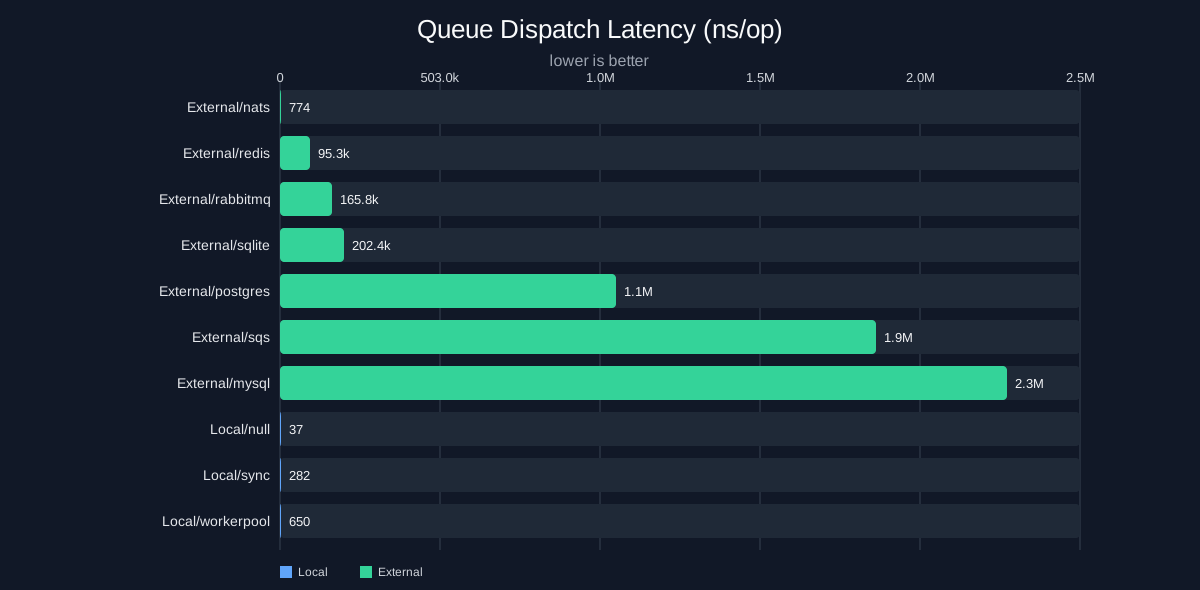
Run local + integration-backed benchmarks (requires Docker/testcontainers):
cd docs && GOWORK=off INTEGRATION_BACKEND=all GOCACHE=/tmp/queue-gocache go test -tags=benchrender ./bench -run '^TestRenderBenchmarks$'Latency (ns/op)
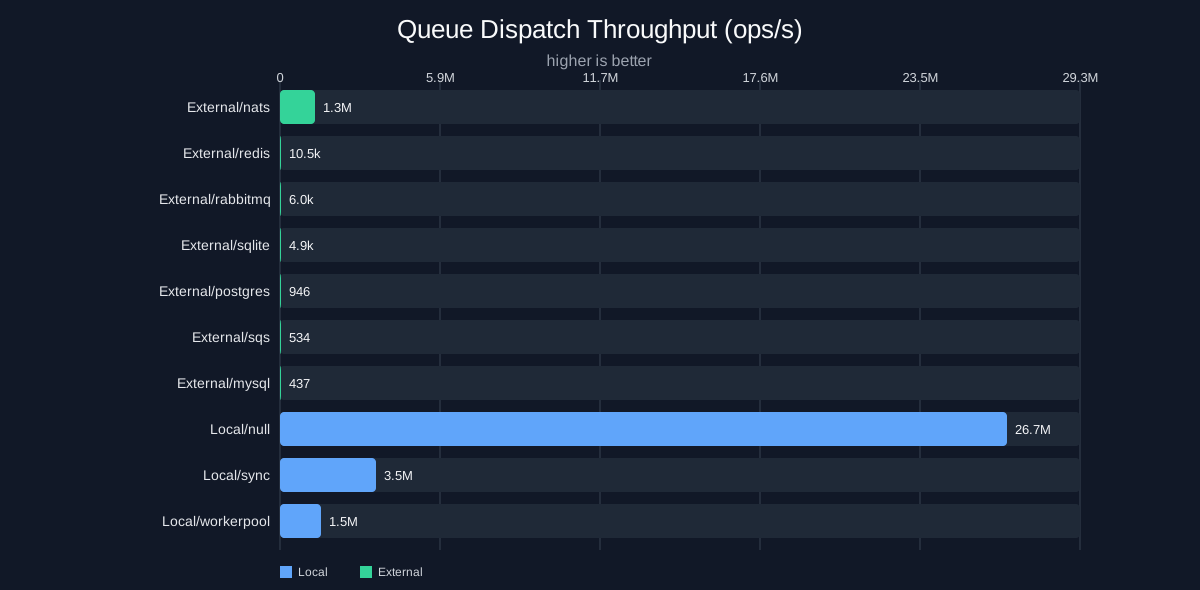
Throughput (ops/s)
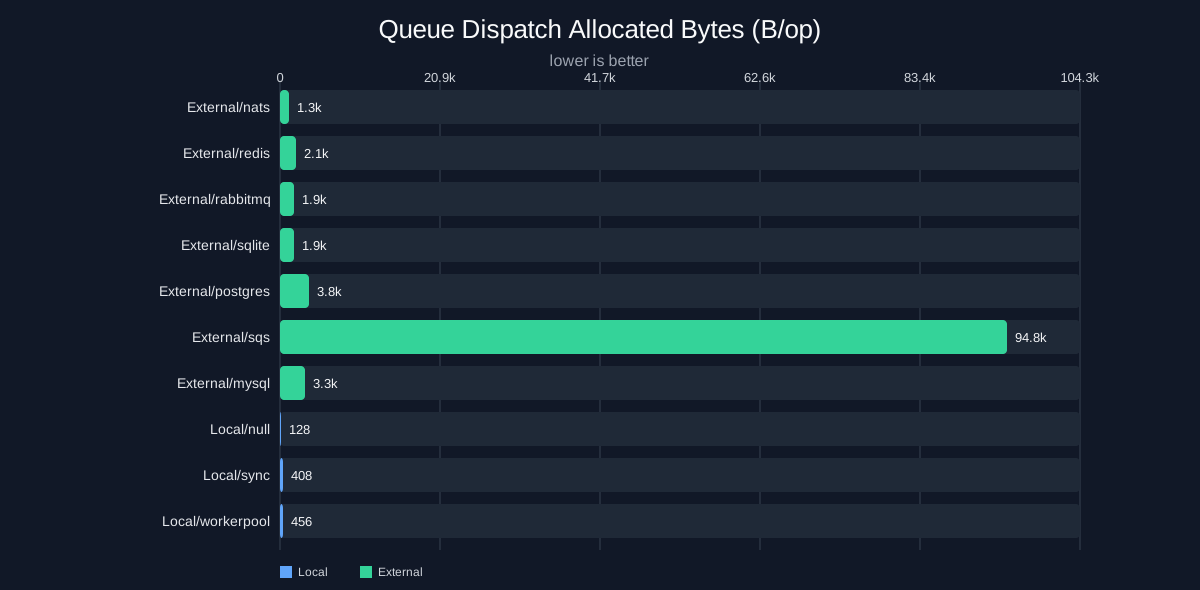
Allocated Bytes (B/op)
Allocations (allocs/op)
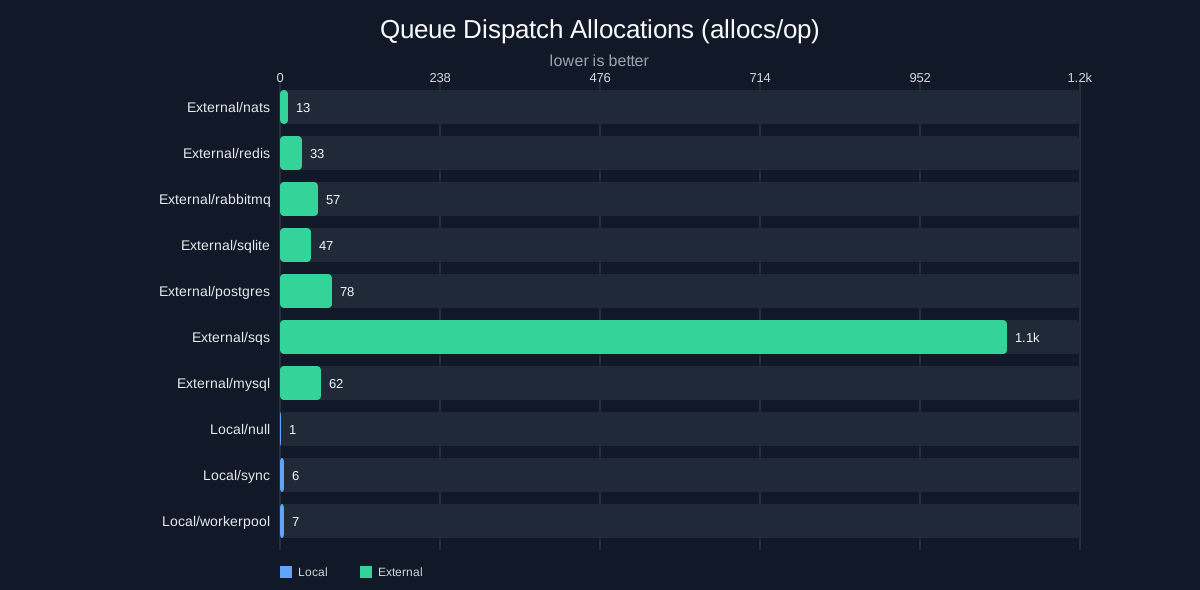
Tables
| Class | Driver | ns/op | ops/s | B/op | allocs/op |
|---|---|---|---|---|---|
| External | nats | 774 | 1291823 | 1258 | 13 |
| External | redis | 95295 | 10494 | 2113 | 33 |
| External | rabbitmq | 165780 | 6032 | 1882 | 57 |
| External | sqlite | 202380 | 4941 | 1931 | 47 |
| External | postgres | 1056731 | 946 | 3809 | 78 |
| External | sqs | 1873911 | 534 | 94784 | 1082 |
| External | mysql | 2286406 | 437 | 3303 | 62 |
| Local | null | 37 | 26673780 | 128 | 1 |
| Local | sync | 282 | 3539823 | 408 | 6 |
| Local | workerpool | 650 | 1538462 | 456 | 7 |
Middleware
Use queue.WithMiddleware(...) to apply cross-cutting workflow behavior to workflow job execution (logging, filtering, and error policy).
Common patterns:
- wrap handler execution (before/after logging, timing, tracing)
- skip jobs conditionally (maintenance mode, feature flags)
- convert matched errors into terminal failures (no retry)
var errValidation = errors.New("validation failed")
maintenanceMode := false

audit := queue.MiddlewareFunc(func(ctx context.Context, m queue.Message, next queue.Next) error {
	log.Printf("start job=%s", m.JobType)
	err := next(ctx, m)
	log.Printf("done job=%s err=%v", m.JobType, err)
	return err
})

skipMaintenance := queue.SkipWhen{
	Predicate: func(context.Context, queue.Message) bool {
		return maintenanceMode
	},
}

fatalValidation := queue.FailOnError{
	When: func(err error) bool {
		return errors.Is(err, errValidation)
	},
}

q, _ := queue.New(
	queue.Config{Driver: queue.DriverWorkerpool},
	queue.WithMiddleware(audit, skipMaintenance, fatalValidation),
)
_ = q
Observability
Use queue.Observer implementations to capture normalized runtime events across drivers.
collector := queue.NewStatsCollector()
observer := queue.MultiObserver(
    collector,
    queue.ObserverFunc(func(_ context.Context, event queue.Event) {
        _ = event.Kind
    }),
)

q, _ := queue.New(
    queue.Config{Driver: queue.DriverWorkerpool},
    queue.WithObserver(observer),
)
_ = q
Distributed counters and source of truth
StatsCollectorcounters are process-local and event-driven.- In multi-process deployments, aggregate metrics externally (OTel/Prometheus/etc.).
- Prefer backend-native stats when available.
queue.SupportsNativeStats(q)indicates native driver snapshot support.queue.Snapshot(ctx, q, collector)merges native + collector where possible.
Compose observers
events := make(chan queue.Event, 100)
collector := queue.NewStatsCollector()
observer := queue.MultiObserver(
    collector,
    queue.ChannelObserver{
        Events:     events,
        DropIfFull: true,
    },
    queue.ObserverFunc(func(_ context.Context, e queue.Event) {
        _ = e
    }),
)

q, _ := queue.New(
    queue.Config{Driver: queue.DriverWorkerpool},
    queue.WithObserver(observer),
)
_ = q
Kitchen sink event logging
Runnable example: examples/observeall/main.go
logger := slog.New(slog.NewJSONHandler(os.Stdout, nil))
observer := queue.ObserverFunc(func(ctx context.Context, event queue.Event) {
	logger.InfoContext(ctx, "queue event",
		"layer", event.Layer,
		"kind", event.Kind,
		"driver", event.Driver,
		"queue", event.Queue,
		"dispatch_id", event.DispatchID,
		"job_id", event.JobID,
		"chain_id", event.ChainID,
		"batch_id", event.BatchID,
		"job_type", event.JobType,
		"attempt", event.Attempt,
		"max_retry", event.MaxRetry,
		"duration", event.Duration,
		"err", event.Err,
	)
})

q, _ := queue.New(
	queue.Config{Driver: queue.DriverSync},
	queue.WithObserver(observer),
)
_ = q
Events reference
| Layer | EventKind | Meaning |
|---|---|---|
| queue | dispatch_started | After job validation, the root facade began a public dispatch. |
| queue | dispatch_succeeded | The backend accepted the public dispatch; synchronous execution may still return an application error. |
| queue | dispatch_failed | Public dispatch ended before backend acceptance. |
| queue | enqueue_accepted | The driver confirmed enqueue acceptance. |
| queue | enqueue_rejected | The driver rejected enqueue with an error. |
| queue | enqueue_duplicate | Uniqueness policy rejected the logical job as a duplicate. |
| queue | enqueue_canceled | Context cancellation or deadline expiry prevented enqueue. |
| worker | process_started | A physical handler attempt began. |
| worker | process_succeeded | Handler success crossed the driver's settlement boundary; runtimes without a settlement hook emit after handler return. |
| worker | process_failed | A handler attempt returned an error or panicked. |
| worker | process_retried | A numbered application retry attempt began; infrastructure redelivery may repeat the fact. |
| worker | process_archived | A SQL driver confirmed its fenced transition to terminal dead state; other built-in runtimes omit it. |
| worker | process_recovered | SQL bulk recovery requeued one stale in-flight claim; identity fields are unavailable at that boundary. |
| worker | republish_failed | An internal delay or retry replacement could not be published. |
| worker | settlement_failed | Delivery finalization, acknowledgement, deletion, or negative settlement failed or was ambiguous; redelivery remains possible. |
| queue | queue_paused | A supporting driver confirmed queue consumption was paused. |
| queue | queue_resumed | A supporting driver confirmed queue consumption was resumed. |
| workflow | job_started | A logical execution attempt began before handler lookup. |
| workflow | job_succeeded | Logical job success committed; settlement-aware drivers publish the fact only after settlement. |
| workflow | job_failed | A logical job reached permanent or exhausted failure. |
| workflow | chain_started | A chain record was created and initial dispatch began. |
| workflow | chain_advanced | A committed node outcome advanced the chain to its next node. |
| workflow | chain_completed | The final chain node committed terminal success. |
| workflow | chain_failed | A chain committed terminal failure. |
| workflow | batch_started | A batch record was created and initial member dispatch began. |
| workflow | batch_progressed | A batch member committed a terminal outcome. |
| workflow | batch_completed | Batch reached terminal success (or allowed-failure completion). |
| workflow | batch_failed | A non-allowed member failure or initial member dispatch rejection committed terminal batch failure. |
| workflow | batch_cancelled | Remaining batch work was cancelled after terminal failure. |
| workflow | callback_started | A claimed terminal Catch, Then, or Finally callback began execution. |
| workflow | callback_succeeded | Terminal callback success crossed the applicable settlement boundary. |
| workflow | callback_failed | A terminal callback was invalid or unavailable, returned an error, or panicked. |
Handler panics now emit process_failed before the original panic value is rethrown. This adds truthful failure telemetry without changing backend panic recovery or retry behavior.
Callback lifecycle facts cover terminal Catch, Then, and Finally callbacks. Inline Batch.Progress closures do not emit callback_* facts.
Examples
Runnable examples live in the separate examples module (./examples). They are not included when applications import github.com/goforj/queue, which keeps dependency graphs and build/link overhead smaller.
Admin Support
Queue admin APIs are part of the core contract so additional drivers can implement them over time. At this time, full admin operations (ListJobs, RetryJob, CancelJob, DeleteJob, ClearQueue) are Redis-only. Use queue.SupportsQueueAdmin(q) (or handle queue.ErrQueueAdminUnsupported) to gate admin workflows per runtime.
API reference
The API section below is autogenerated; do not edit between the markers.
API Index
API
Admin
CancelJob
CancelJob cancels a job when supported.
q, err := redisqueue.New("127.0.0.1:6379")
if err != nil {
	return
}
err = queue.CancelJob(context.Background(), q, "job-id")
_ = err
Queue.CancelJob
CancelJob cancels a job via queue admin capability when supported.
q, err := redisqueue.New("127.0.0.1:6379")
if err != nil {
	return
}
if !queue.SupportsQueueAdmin(q) {
	return
}
err = q.CancelJob(context.Background(), "job-id")
_ = err
ClearQueue
ClearQueue clears queue jobs when supported.
q, err := redisqueue.New("127.0.0.1:6379")
if err != nil {
	return
}
err = queue.ClearQueue(context.Background(), q, "default")
_ = err
Queue.ClearQueue
ClearQueue clears queue jobs via queue admin capability when supported.
q, err := redisqueue.New("127.0.0.1:6379")
if err != nil {
	return
}
if !queue.SupportsQueueAdmin(q) {
	return
}
err = q.ClearQueue(context.Background(), "default")
_ = err
DeleteJob
DeleteJob deletes a job when supported.
q, err := redisqueue.New("127.0.0.1:6379")
if err != nil {
	return
}
err = queue.DeleteJob(context.Background(), q, "default", "job-id")
_ = err
Queue.DeleteJob
DeleteJob deletes a job via queue admin capability when supported.
q, err := redisqueue.New("127.0.0.1:6379")
if err != nil {
	return
}
if !queue.SupportsQueueAdmin(q) {
	return
}
err = q.DeleteJob(context.Background(), "default", "job-id")
_ = err
History
History returns queue history points via queue admin capability when supported.
q, err := redisqueue.New("127.0.0.1:6379")
if err != nil {
	return
}
points, err := q.History(context.Background(), "default", queue.QueueHistoryHour)
_ = err
ListJobs
ListJobs lists jobs for a queue and state when supported.
q, err := redisqueue.New("127.0.0.1:6379")
if err != nil {
	return
}
_, err = queue.ListJobs(context.Background(), q, queue.ListJobsOptions{
	Queue: "default",
	State: queue.JobStatePending,
})
_ = err
Queue.ListJobs
ListJobs lists jobs via queue admin capability when supported.
q, err := redisqueue.New("127.0.0.1:6379")
if err != nil {
	return
}
_, err = q.ListJobs(context.Background(), queue.ListJobsOptions{
	Queue: "default",
	State: queue.JobStatePending,
})
_ = err
Normalize
Normalize returns a safe options payload with defaults applied.
opts := queue.ListJobsOptions{Queue: "", State: "", Page: 0, PageSize: 1000}
normalized := opts.Normalize()
fmt.Println(normalized.Queue, normalized.State, normalized.Page, normalized.PageSize)
// Output: default pending 1 500
QueueHistory
QueueHistory returns queue history points when supported.
q, err := redisqueue.New("127.0.0.1:6379")
if err != nil {
	return
}
_, err = queue.QueueHistory(context.Background(), q, "default", queue.QueueHistoryHour)
_ = err
RetryJob
RetryJob retries (runs now) a job when supported.
q, err := redisqueue.New("127.0.0.1:6379")
if err != nil {
	return
}
err = queue.RetryJob(context.Background(), q, "default", "job-id")
_ = err
Queue.RetryJob
RetryJob retries (runs now) a job via queue admin capability when supported.
q, err := redisqueue.New("127.0.0.1:6379")
if err != nil {
	return
}
if !queue.SupportsQueueAdmin(q) {
	return
}
err = q.RetryJob(context.Background(), "default", "job-id")
_ = err
SinglePointHistory
SinglePointHistory converts a snapshot into a single current-history point. This helper is intended for driver modules that do not expose historical buckets.
snapshot := queue.StatsSnapshot{
	ByQueue: map[string]queue.QueueCounters{
		"default": {Processed: 12, Failed: 1},
	},
}
points := queue.SinglePointHistory(snapshot, "default")
fmt.Println(len(points), points[0].Processed, points[0].Failed)
// Output: 1 12 1
SupportsQueueAdmin
SupportsQueueAdmin reports whether queue admin operations are available.
q, err := redisqueue.New("127.0.0.1:6379")
if err != nil {
	return
}
fmt.Println(queue.SupportsQueueAdmin(q))
// Output: true
TimelineHistoryFromSnapshot
TimelineHistoryFromSnapshot records queue counters and returns windowed points. This is intended for drivers that don't expose native multi-point history.
snapshot := queue.StatsSnapshot{
	ByQueue: map[string]queue.QueueCounters{
		"default": {Processed: 5, Failed: 1},
	},
}
points := queue.TimelineHistoryFromSnapshot(snapshot, "default", queue.QueueHistoryHour)
fmt.Println(len(points) >= 1)
// Output: true
Constructors
queue.New
New creates the high-level Queue API based on Config.Driver.
q, err := queue.New(queue.Config{Driver: queue.DriverWorkerpool})
if err != nil {
	return
}
type EmailPayload struct {
	ID int `json:"id"`
}
q.Register("emails:send", func(ctx context.Context, m queue.Message) error {
	var payload EmailPayload
	if err := m.Bind(&payload); err != nil {
		return err
	}
	_ = payload
	return nil
})
_ = q.WithWorkers(1).StartWorkers(context.Background()) // optional; default: runtime.NumCPU() (min 1)
defer q.Shutdown(context.Background())
_, _ = q.Dispatch(
	queue.NewJob("emails:send").
		Payload(EmailPayload{ID: 1}).
		OnQueue("default"),
)
NewMemoryStore
NewMemoryStore creates an in-memory workflow state store. It copies chain nodes and payload bytes on creation and return so callers retain independent ownership.
NewMessage
NewMessage creates a logical queue message from an application job type and exact payload bytes. The payload is copied so callers can safely reuse or mutate their input buffer.
NewNull
NewNull creates a Queue on the null backend.
q, err := queue.NewNull()
if err != nil {
	return
}
NewSQLStore
NewSQLStore creates a SQL-backed workflow state store.
NewSQLStoreWithManagedSchema
NewSQLStoreWithManagedSchema creates a SQL-backed workflow state store without executing schema DDL. The supplied database must already contain the dialect-correct workflow tables, including transition receipts.
NewStatsCollector
NewStatsCollector creates an event collector for queue counters.
collector := queue.NewStatsCollector()NewSync
NewSync creates a Queue on the synchronous in-process backend.
q, err := queue.NewSync()
if err != nil {
	return
}
NewWorkerpool
NewWorkerpool creates a Queue on the in-process workerpool backend.
q, err := queue.NewWorkerpool()
if err != nil {
	return
}
Job
Backoff
Backoff sets delay between retries.
job := queue.NewJob("emails:send").Backoff(500 * time.Millisecond)Job.Bind
Bind unmarshals job payload JSON into dst.
type EmailPayload struct {
	ID int    `json:"id"`
	To string `json:"to"`
}
job := queue.NewJob("emails:send").Payload(EmailPayload{
	ID: 1,
	To: "[email protected]",
})
var payload EmailPayload
if err := job.Bind(&payload); err != nil {
	return
}
_ = payload.To
Delay
Delay defers execution by duration.
job := queue.NewJob("emails:send").Delay(300 * time.Millisecond)NewJob
NewJob creates a job value with a required job type.
job := queue.NewJob("emails:send")Job.OnQueue
OnQueue sets the target queue name.
job := queue.NewJob("emails:send").OnQueue("critical")Payload
Payload sets job payload from common value types.
Example: payload bytes
jobBytes := queue.NewJob("emails:send").Payload([]byte(`{"id":1}`))Example: payload struct
type Meta struct {
	Nested bool `json:"nested"`
}
type EmailPayload struct {
	ID   int    `json:"id"`
	To   string `json:"to"`
	Meta Meta   `json:"meta"`
}
jobStruct := queue.NewJob("emails:send").Payload(EmailPayload{
	ID:   1,
	To:   "[email protected]",
	Meta: Meta{Nested: true},
})
Example: payload map
jobMap := queue.NewJob("emails:send").Payload(map[string]any{
	"id":  1,
	"to":  "[email protected]",
	"meta": map[string]any{"nested": true},
})
Job.PayloadAs
PayloadAs unmarshals the job payload JSON and returns it as T.
type EmailPayload struct {
	To string `json:"to"`
}
job := queue.NewJob("emails:send").Payload(EmailPayload{To: "[email protected]"})
payload, err := job.PayloadAs[EmailPayload]()
fmt.Println(err == nil, payload.To)
// true [email protected]
Job.PayloadBytes
PayloadBytes returns a copy of job payload bytes.
job := queue.NewJob("emails:send").Payload([]byte(`{"id":1}`))
payload := job.PayloadBytes()
PayloadJSON
PayloadJSON marshals payload as JSON.
job := queue.NewJob("emails:send").PayloadJSON(map[string]int{"id": 1})Retry
Retry sets max retry attempts.
job := queue.NewJob("emails:send").Retry(4)Timeout
Timeout sets per-job execution timeout.
job := queue.NewJob("emails:send").Timeout(10 * time.Second)UniqueFor
UniqueFor enables uniqueness dedupe within the given TTL.
job := queue.NewJob("emails:send").UniqueFor(45 * time.Second)Observability
Active
Active returns active count for a queue.
snapshot := queue.StatsSnapshot{
	ByQueue: map[string]queue.QueueCounters{
		"default": {Active: 2},
	},
}
fmt.Println(snapshot.Active("default"))
// Output: 2
Archived
Archived returns archived count for a queue.
snapshot := queue.StatsSnapshot{
	ByQueue: map[string]queue.QueueCounters{
		"default": {Archived: 7},
	},
}
fmt.Println(snapshot.Archived("default"))
// Output: 7
Failed
Failed returns failed count for a queue.
snapshot := queue.StatsSnapshot{
	ByQueue: map[string]queue.QueueCounters{
		"default": {Failed: 2},
	},
}
fmt.Println(snapshot.Failed("default"))
// Output: 2
MultiObserver
MultiObserver fans out events to multiple observers.
events := make(chan queue.Event, 2)
observer := queue.MultiObserver(
	queue.ChannelObserver{Events: events},
	queue.ObserverFunc(func(context.Context, queue.Event) {}),
)
observer.Observe(context.Background(), queue.Event{Kind: queue.EventEnqueueAccepted})
fmt.Println(len(events))
// Output: 1
ChannelObserver.Observe
Observe forwards an event to the configured channel.
ch := make(chan queue.Event, 1)
observer := queue.ChannelObserver{Events: ch}
observer.Observe(context.Background(), queue.Event{Kind: queue.EventProcessStarted, Queue: "default"})
event := <-ch
Observer.Observe
Observe handles a queue runtime event.
var observer queue.Observer
observer.Observe(context.Background(), queue.Event{
	Kind:   queue.EventEnqueueAccepted,
	Driver: queue.DriverSync,
	Queue:  "default",
})
ObserverFunc.Observe
Observe calls the wrapped function.
logger := slog.New(slog.NewTextHandler(os.Stdout, nil))
observer := queue.ObserverFunc(func(ctx context.Context, event queue.Event) {
	logger.Info("queue event",
		"kind", event.Kind,
		"driver", event.Driver,
		"queue", event.Queue,
		"job_type", event.JobType,
		"attempt", event.Attempt,
		"max_retry", event.MaxRetry,
		"duration", event.Duration,
		"err", event.Err,
	)
})
observer.Observe(context.Background(), queue.Event{
	Kind:     queue.EventProcessSucceeded,
	Driver:   queue.DriverSync,
	Queue:    "default",
	JobType: "emails:send",
})
StatsCollector.Observe
Observe records an event and updates normalized counters.
collector := queue.NewStatsCollector()
collector.Observe(context.Background(), queue.Event{
	Kind:   queue.EventEnqueueAccepted,
	Driver: queue.DriverSync,
	Queue:  "default",
	Time:   time.Now(),
})
Pause
Pause pauses queue consumption for drivers that support it.
q, _ := queue.NewSync()
_ = queue.Pause(context.Background(), q, "default")
snapshot, _ := queue.Snapshot(context.Background(), q, nil)
fmt.Println(snapshot.Paused("default"))
// Output: 1
Paused
Paused returns the observed pause state for a queue as zero or one.
collector := queue.NewStatsCollector()
collector.Observe(context.Background(), queue.Event{
	Kind:   queue.EventQueuePaused,
	Driver: queue.DriverSync,
	Queue:  "default",
	Time:   time.Now(),
})
snapshot := collector.Snapshot()
fmt.Println(snapshot.Paused("default"))
// Output: 1
Pending
Pending returns pending count for a queue.
snapshot := queue.StatsSnapshot{
	ByQueue: map[string]queue.QueueCounters{
		"default": {Pending: 3},
	},
}
fmt.Println(snapshot.Pending("default"))
// Output: 3
Processed
Processed returns processed count for a queue.
snapshot := queue.StatsSnapshot{
	ByQueue: map[string]queue.QueueCounters{
		"default": {Processed: 11},
	},
}
fmt.Println(snapshot.Processed("default"))
// Output: 11
Queue
Queue returns queue counters for a queue name.
collector := queue.NewStatsCollector()
collector.Observe(context.Background(), queue.Event{
	Kind:   queue.EventEnqueueAccepted,
	Driver: queue.DriverSync,
	Queue:  "default",
	Time:   time.Now(),
})
snapshot := collector.Snapshot()
counters, ok := snapshot.Queue("default")
fmt.Println(ok, counters.Pending)
// Output: true 1
Queues
Queues returns sorted queue names present in the snapshot.
collector := queue.NewStatsCollector()
collector.Observe(context.Background(), queue.Event{
	Kind:   queue.EventEnqueueAccepted,
	Driver: queue.DriverSync,
	Queue:  "critical",
	Time:   time.Now(),
})
snapshot := collector.Snapshot()
names := snapshot.Queues()
fmt.Println(len(names), names[0])
// Output: 1 critical
Ready
Ready validates backend readiness for the provided queue runtime.
q, _ := queue.NewSync()
fmt.Println(queue.Ready(context.Background(), q) == nil)
// true
Resume
Resume resumes queue consumption for drivers that support it.
q, _ := queue.NewSync()
_ = queue.Pause(context.Background(), q, "default")
_ = queue.Resume(context.Background(), q, "default")
snapshot, _ := queue.Snapshot(context.Background(), q, nil)
fmt.Println(snapshot.Paused("default"))
// Output: 0
RetryCount
RetryCount returns retry count for a queue.
snapshot := queue.StatsSnapshot{
	ByQueue: map[string]queue.QueueCounters{
		"default": {Retry: 1},
	},
}
fmt.Println(snapshot.RetryCount("default"))
// Output: 1
SafeObserve
SafeObserve delivers an event to an observer and recovers observer panics.
This is an advanced helper intended for driver-module implementations.
Scheduled
Scheduled returns scheduled count for a queue.
snapshot := queue.StatsSnapshot{
	ByQueue: map[string]queue.QueueCounters{
		"default": {Scheduled: 4},
	},
}
fmt.Println(snapshot.Scheduled("default"))
// Output: 4
Snapshot
Snapshot returns driver-native stats, falling back to collector data.
q, _ := queue.NewSync()
snapshot, _ := q.Stats(context.Background())
_, ok := snapshot.Queue("default")
fmt.Println(ok)
// Output: true
StatsCollector.Snapshot
Snapshot returns a copy of collected counters.
collector := queue.NewStatsCollector()
collector.Observe(context.Background(), queue.Event{
	Kind:   queue.EventEnqueueAccepted,
	Driver: queue.DriverSync,
	Queue:  "default",
	Time:   time.Now(),
})
collector.Observe(context.Background(), queue.Event{
	Kind:   queue.EventProcessStarted,
	Driver: queue.DriverSync,
	Queue:  "default",
	JobKey: "job-1",
	Time:   time.Now(),
})
collector.Observe(context.Background(), queue.Event{
	Kind:     queue.EventProcessSucceeded,
	Driver:   queue.DriverSync,
	Queue:    "default",
	JobKey:  "job-1",
	Duration: 12 * time.Millisecond,
	Time:     time.Now(),
})
snapshot := collector.Snapshot()
counters, _ := snapshot.Queue("default")
throughput, _ := snapshot.Throughput("default")
fmt.Printf("queues=%v\n", snapshot.Queues())
fmt.Printf("counters=%+v\n", counters)
fmt.Printf("hour=%+v\n", throughput.Hour)
// Output:
// queues=[default]
// counters={Pending:0 Active:0 Scheduled:0 Retry:0 Archived:0 Processed:1 Failed:0 Paused:0 AvgWait:0s AvgRun:12ms}
// hour={Processed:1 Failed:0}
SupportsNativeStats
SupportsNativeStats reports whether a queue runtime exposes native stats snapshots.
q, _ := queue.NewSync()
fmt.Println(queue.SupportsNativeStats(q))
// Output: true
SupportsPause
SupportsPause reports whether a queue runtime supports Pause/Resume.
q, _ := queue.NewSync()
fmt.Println(queue.SupportsPause(q))
// Output: true
Throughput
Throughput returns rolling throughput windows for a queue name.
collector := queue.NewStatsCollector()
collector.Observe(context.Background(), queue.Event{
	Kind:   queue.EventProcessSucceeded,
	Driver: queue.DriverSync,
	Queue:  "default",
	Time:   time.Now(),
})
snapshot := collector.Snapshot()
throughput, ok := snapshot.Throughput("default")
fmt.Printf("ok=%v hour=%+v day=%+v week=%+v\n", ok, throughput.Hour, throughput.Day, throughput.Week)
// Output: ok=true hour={Processed:1 Failed:0} day={Processed:1 Failed:0} week={Processed:1 Failed:0}
Other
Acquire
Acquire attempts to hold key for ttl.
AdvanceChain
AdvanceChain atomically claims completedNode and returns the current successor. Repeating the same (chainID, completedNode) claim must not advance again. When done is true, GetChain must immediately expose Completed or Failed state.
Allow
Allow returns whether key may execute and any suggested retry delay.
AllowFailures
AllowFailures keeps remaining members active after a terminal member failure.
CancelBatch
CancelBatch commits aggregate batch cancellation.
BatchBuilder.Catch
Catch registers the explicitly ephemeral batch failure callback.
ChainBuilder.Catch
Catch registers the explicitly ephemeral chain failure callback.
CreateBatch
CreateBatch persists a newly accepted batch. BatchID and every JobID must be non-empty, Jobs must contain at least one entry, and JobIDs must be unique.
CreateChain
CreateChain persists a newly accepted chain. ChainID and every NodeID must be non-empty, Nodes must contain at least one entry, and NodeIDs must be unique.
BatchBuilder.Dispatch
Dispatch persists and starts the batch workflow.
ChainBuilder.Dispatch
Dispatch persists and starts the chain workflow.
FailChain
FailChain commits terminal failure without replacing completed state.
FailChainNode
FailChainNode commits failure only while nodeID is the current unsettled node. owned remains true on replay while that node's failure owns the chain.
BatchBuilder.Finally
Finally registers the explicitly ephemeral batch terminal callback.
ChainBuilder.Finally
Finally registers the explicitly ephemeral chain terminal callback.
GetBatch
GetBatch returns current batch state.
GetChain
GetChain returns current chain state.
FailOnError.Handle
Handle wraps matched errors as fatal errors to stop retries.
Middleware.Handle
Handle wraps the remaining middleware and handler chain.
MiddlewareFunc.Handle
Handle calls the wrapped middleware function.
RateLimit.Handle
Handle applies limiter checks before executing the next handler.
RetryPolicy.Handle
Handle passes execution through without modification.
SkipWhen.Handle
Handle skips job execution when Predicate returns true.
WithoutOverlapping.Handle
Handle acquires a lock and prevents concurrent overlap for the same key.
MarkBatchJobFailed
MarkBatchJobFailed commits the first outcome for (batchID, jobID). Duplicate outcomes must return current state without changing counters.
MarkBatchJobStarted
MarkBatchJobStarted records that one batch member began execution.
MarkBatchJobSucceeded
MarkBatchJobSucceeded commits the first outcome for (batchID, jobID). Duplicate outcomes must return current state without changing counters.
MarkCallbackInvoked
MarkCallbackInvoked atomically claims one callback idempotency key.
Name
Name assigns an application-facing label to the batch.
BatchBuilder.OnQueue
OnQueue applies a default queue to batch jobs without an explicit target.
ChainBuilder.OnQueue
OnQueue applies a default queue to chain jobs without an explicit target.
PhysicalQueueName
PhysicalQueueName maps a logical queue name into the physical name used by the backing queue driver.
PhysicalQueueWeights
PhysicalQueueWeights maps logical weighted queue names into their physical backend names.
Progress
Progress registers the explicitly ephemeral batch progress callback.
WorkflowStore.Prune
Prune removes terminal workflow state older than before.
Release
Release relinquishes the acquired lease.
ResolveObservedJobType
ResolveObservedJobType returns the effective application job type that should be emitted to observers. External workers may process private workflow delivery envelopes (for example, "bus:job") whose payload embeds the real application job type. When possible, this helper unwraps that payload so dashboards and metrics reflect the user-facing job type instead of the transport wrapper.
SettleBatchJob
SettleBatchJob returns the first committed outcome for one batch member. owned remains true on same-outcome replay and false when the opposite outcome won. Ownership covers the outcome category; BatchState does not retain a per-member cause.
Then
Then registers the explicitly ephemeral batch success callback.
Queue
Queue.Batch
Batch creates a batch builder for fan-out workflow execution.
q, err := queue.NewSync()
if err != nil {
	return
}
q.Register("emails:send", func(ctx context.Context, m queue.Message) error { return nil })
if err := q.StartWorkers(context.Background()); err != nil {
	return
}
defer q.Shutdown(context.Background())
_, _ = q.Batch(
	queue.NewJob("emails:send").Payload(map[string]any{"id": 1}),
	queue.NewJob("emails:send").Payload(map[string]any{"id": 2}),
).Name("send-emails").OnQueue("default").Dispatch(context.Background())
Message.Bind
Bind unmarshals the raw job payload into dst.
Queue.Chain
Chain creates a chain builder for sequential workflow execution.
q, err := queue.NewSync()
if err != nil {
	return
}
q.Register("first", func(ctx context.Context, m queue.Message) error { return nil })
q.Register("second", func(ctx context.Context, m queue.Message) error { return nil })
if err := q.StartWorkers(context.Background()); err != nil {
	return
}
defer q.Shutdown(context.Background())
_, _ = q.Chain(
	queue.NewJob("first"),
	queue.NewJob("second"),
).OnQueue("default").Dispatch(context.Background())
Queue.Dispatch
Dispatch enqueues a high-level job using its application type and exact payload bytes together with the queue's bound context.
q, err := queue.NewSync()
if err != nil {
	return
}
q.Register("emails:send", func(ctx context.Context, m queue.Message) error { return nil })
if err := q.StartWorkers(context.Background()); err != nil {
	return
}
defer q.Shutdown(context.Background())
job := queue.NewJob("emails:send").Payload(map[string]any{"id": 1}).OnQueue("default")
_, _ = q.Dispatch(job)
Queue.Driver
Driver reports the configured backend driver for the underlying queue runtime.
q, err := queue.NewSync()
if err != nil {
	return
}
fmt.Println(q.Driver())
// Output: sync
Queue.FindBatch
FindBatch returns current batch state by ID.
q, err := queue.NewSync()
if err != nil {
	return
}
q.Register("emails:send", func(ctx context.Context, m queue.Message) error { return nil })
batchID, err := q.Batch(queue.NewJob("emails:send")).Dispatch(context.Background())
if err != nil {
	return
}
_, _ = q.FindBatch(context.Background(), batchID)
Queue.FindChain
FindChain returns current chain state by ID.
q, err := queue.NewSync()
if err != nil {
	return
}
q.Register("first", func(ctx context.Context, m queue.Message) error { return nil })
chainID, err := q.Chain(queue.NewJob("first")).Dispatch(context.Background())
if err != nil {
	return
}
_, _ = q.FindChain(context.Background(), chainID)
IsPermanent
IsPermanent reports whether an error requests terminal application settlement.
Queue.Pause
Pause pauses consumption for a queue when supported by the underlying driver. See the README "Queue Backends" table for Pause/Resume support and docs/backend-guarantees.md (Capability Matrix) for broader backend differences.
q, err := queue.NewSync()
if err != nil {
	return
}
if queue.SupportsPause(q) {
	_ = q.Pause(context.Background(), "default")
}
Message.PayloadAs
PayloadAs unmarshals the delivered payload and returns it as T.
type EmailPayload struct {
	To string `json:"to"`
}
message := queue.NewMessage("emails:send", []byte(`{"to":"[email protected]"}`))
payload, err := message.PayloadAs[EmailPayload]()
fmt.Println(err == nil, payload.To)
// true [email protected]
Message.PayloadBytes
PayloadBytes returns an isolated copy of the raw job payload.
Permanent
Permanent marks an error as terminal so workers do not spend the remaining application retry budget on it.
Queue.Prune
Prune deletes old workflow state records.
q, err := queue.NewSync()
if err != nil {
	return
}
_ = q.Prune(context.Background(), time.Now().Add(-24*time.Hour))
Queue.Ready
Ready validates queue backend readiness for dispatch/worker operation.
q, err := queue.NewSync()
if err != nil {
	return
}
fmt.Println(q.Ready(context.Background()) == nil)
// true
Queue.Register
Register binds a handler for a high-level job type.
q, err := queue.NewSync()
if err != nil {
	return
}
type EmailPayload struct {
	ID int `json:"id"`
}
q.Register("emails:send", func(ctx context.Context, m queue.Message) error {
	var payload EmailPayload
	if err := m.Bind(&payload); err != nil {
		return err
	}
	_ = payload
	return nil
})
Queue.Resume
Resume resumes consumption for a queue when supported by the underlying driver.
q, err := queue.NewSync()
if err != nil {
	return
}
if queue.SupportsPause(q) {
	_ = q.Resume(context.Background(), "default")
}
Run
Run starts worker processing, blocks until ctx is canceled, then gracefully shuts down.
ctx, cancel := context.WithCancel(context.Background())
defer cancel()
q, err := queue.NewWorkerpool()
if err != nil {
	return
}
q.Register("emails:send", func(ctx context.Context, m queue.Message) error { return nil })
go func() {
	time.Sleep(100 * time.Millisecond)
	cancel()
}()
_ = q.Run(ctx)
Queue.Shutdown
Shutdown drains workers and closes underlying resources.
q, err := queue.NewWorkerpool()
if err != nil {
	return
}
_ = q.StartWorkers(context.Background())
_ = q.Shutdown(context.Background())
Queue.StartWorkers
StartWorkers starts worker processing.
q, err := queue.NewWorkerpool()
if err != nil {
	return
}
_ = q.StartWorkers(context.Background())
Stats
Stats returns a normalized snapshot when supported by the underlying driver.
q, err := queue.NewSync()
if err != nil {
	return
}
if queue.SupportsNativeStats(q) {
	_, _ = q.Stats(context.Background())
}
WithClock
WithClock overrides the workflow runtime clock.
q, err := queue.New(
	queue.Config{Driver: queue.DriverSync},
	queue.WithClock(func() time.Time { return time.Unix(0, 0) }),
)
if err != nil {
	return
}
Queue.WithContext
WithContext returns a derived queue handle bound to ctx.
WithHandlerContextDecorator
WithHandlerContextDecorator decorates queue handler execution context before process lifecycle events and handler execution run.
q, err := queue.New(
	queue.Config{Driver: queue.DriverSync},
	queue.WithHandlerContextDecorator(func(ctx context.Context) context.Context {
		return context.WithValue(ctx, "source", "jobs")
	}),
)
if err != nil {
	return
}
WithLegacyDirectEnvelope
WithLegacyDirectEnvelope keeps ordinary dispatches on the version-one bus:job wire route during a workers-first migration. Remove this option only after every consumer can process canonical direct deliveries. See the direct delivery migration guide for backend-specific rollout and rollback.
WithMiddleware
WithMiddleware appends queue workflow middleware.
mw := queue.MiddlewareFunc(func(ctx context.Context, m queue.Message, next queue.Next) error {
	return next(ctx, m)
})
q, err := queue.New(queue.Config{Driver: queue.DriverSync}, queue.WithMiddleware(mw))
if err != nil {
	return
}
WithObserver
WithObserver installs one observer for queue, worker, and workflow lifecycle events.
observer := queue.ObserverFunc(func(_ context.Context, event queue.Event) {
	_ = event.Kind
})
q, err := queue.New(queue.Config{Driver: queue.DriverSync}, queue.WithObserver(observer))
if err != nil {
	return
}
WithStore
WithStore overrides the workflow orchestration store.
var store queue.WorkflowStore
q, err := queue.New(queue.Config{Driver: queue.DriverSync}, queue.WithStore(store))
if err != nil {
	return
}
WithWorkers
WithWorkers sets desired worker concurrency before StartWorkers. It applies to high-level queue constructors (for example NewWorkerpool/New/NewSync).
q, err := queue.NewWorkerpool(
	queue.WithWorkers(4), // optional; default: runtime.NumCPU() (min 1)
)
if err != nil {
	return
}
Queue.WithWorkers
WithWorkers sets desired worker concurrency before StartWorkers.
q, err := queue.NewWorkerpool()
if err != nil {
	return
}
q.WithWorkers(4) // optional; default: runtime.NumCPU() (min 1)
Driver Constructors
mysqlqueue
mysqlqueue.New
New creates a high-level Queue using the MySQL SQL backend.
q, err := mysqlqueue.New(
	"user:pass@tcp(127.0.0.1:3306)/queue?parseTime=true",
	queue.WithWorkers(4), // optional; default: 1 worker
)
if err != nil {
	return
}
mysqlqueue.NewWithConfig
NewWithConfig creates a high-level Queue using an explicit MySQL SQL driver config.
q, err := mysqlqueue.NewWithConfig(
	mysqlqueue.Config{
		DriverBaseConfig: queueconfig.DriverBaseConfig{
			DefaultQueue: "critical", // default if empty: "default"
			Observer:     nil,        // default: nil
		},
		DB: nil, // optional; provide *sql.DB instead of DSN
		DSN: "user:pass@tcp(127.0.0.1:3306)/queue?parseTime=true", // optional if DB is set
		DisableAutoMigrate: false, // set true when schema migrations are managed externally
		ProcessingRecoveryGrace:  2 * time.Second, // default if <=0: 2s
		ProcessingLeaseNoTimeout: 5 * time.Minute, // default if <=0: 5m
	},
	queue.WithWorkers(4), // optional; default: 1 worker
)
if err != nil {
	return
}
natsqueue
natsqueue.New
New creates a high-level Queue using the NATS backend.
q, err := natsqueue.New(
	"nats://127.0.0.1:4222",
	queue.WithWorkers(4), // optional; default: runtime.NumCPU() (min 1)
)
if err != nil {
	return
}
natsqueue.NewWithConfig
NewWithConfig creates a high-level Queue using an explicit NATS driver config.
q, err := natsqueue.NewWithConfig(
	natsqueue.Config{
		DriverBaseConfig: queueconfig.DriverBaseConfig{
			DefaultQueue: "critical", // default if empty: "default"
			Observer:     nil,        // default: nil
		},
		URL: "nats://127.0.0.1:4222", // required
	},
	queue.WithWorkers(4), // optional; default: runtime.NumCPU() (min 1)
)
if err != nil {
	return
}
postgresqueue
postgresqueue.New
New creates a high-level Queue using the Postgres SQL backend.
q, err := postgresqueue.New(
	"postgres://user:[email protected]:5432/queue?sslmode=disable",
	queue.WithWorkers(4), // optional; default: 1 worker
)
if err != nil {
	return
}
postgresqueue.NewWithConfig
NewWithConfig creates a high-level Queue using an explicit Postgres SQL driver config.
q, err := postgresqueue.NewWithConfig(
	postgresqueue.Config{
		DriverBaseConfig: queueconfig.DriverBaseConfig{
			DefaultQueue: "critical", // default if empty: "default"
			Observer:     nil,        // default: nil
		},
		DB: nil, // optional; provide *sql.DB instead of DSN
		DSN: "postgres://user:[email protected]:5432/queue?sslmode=disable", // optional if DB is set
		DisableAutoMigrate: false, // set true when schema migrations are managed externally
		ProcessingRecoveryGrace:  2 * time.Second, // default if <=0: 2s
		ProcessingLeaseNoTimeout: 5 * time.Minute, // default if <=0: 5m
	},
	queue.WithWorkers(4), // optional; default: 1 worker
)
if err != nil {
	return
}
rabbitmqqueue
rabbitmqqueue.New
New creates a high-level Queue using the RabbitMQ backend.
q, err := rabbitmqqueue.New(
	"amqp://guest:[email protected]:5672/",
	queue.WithWorkers(4), // optional; default: runtime.NumCPU() (min 1)
)
if err != nil {
	return
}
rabbitmqqueue.NewWithConfig
NewWithConfig creates a high-level Queue using an explicit RabbitMQ driver config.
q, err := rabbitmqqueue.NewWithConfig(
	rabbitmqqueue.Config{
		DriverBaseConfig: queueconfig.DriverBaseConfig{
			DefaultQueue: "critical", // default if empty: "default"
			Observer:     nil,        // default: nil
		},
		URL: "amqp://guest:[email protected]:5672/", // required
	},
	queue.WithWorkers(4), // optional; default: runtime.NumCPU() (min 1)
)
if err != nil {
	return
}
redisqueue
redisqueue.New
New creates a high-level Queue using the Redis backend.
q, err := redisqueue.New(
	"127.0.0.1:6379",
	queue.WithWorkers(4), // optional; default: runtime.NumCPU() (min 1)
)
if err != nil {
	return
}
redisqueue.NewWithConfig
NewWithConfig creates a high-level Queue using an explicit Redis driver config.
q, err := redisqueue.NewWithConfig(
	redisqueue.Config{
		DriverBaseConfig: queueconfig.DriverBaseConfig{
			DefaultQueue: "critical", // default if empty: "default"
			Observer:     nil,        // default: nil
		},
		Addr: "127.0.0.1:6379", // required
		Password: "",           // optional; default empty
		DB: 0,                  // optional; default 0
		Logger: nil,            // optional; default backend logger
		ServerLogLevel: redisqueue.ServerLogLevelDefault, // optional
	},
	queue.WithWorkers(4), // optional; default: runtime.NumCPU() (min 1)
)
if err != nil {
	return
}
sqlitequeue
sqlitequeue.New
New creates a high-level Queue using the SQLite SQL backend.
q, err := sqlitequeue.New(
	"file:queue.db?_busy_timeout=5000",
	queue.WithWorkers(4), // optional; default: 1 worker
)
if err != nil {
	return
}
sqlitequeue.NewWithConfig
NewWithConfig creates a high-level Queue using an explicit SQLite SQL driver config.
q, err := sqlitequeue.NewWithConfig(
	sqlitequeue.Config{
		DriverBaseConfig: queueconfig.DriverBaseConfig{
			DefaultQueue: "critical", // default if empty: "default"
			Observer:     nil,        // default: nil
		},
		DB: nil, // optional; provide *sql.DB instead of DSN
		DSN: "file:queue.db?_busy_timeout=5000", // optional if DB is set
		DisableAutoMigrate: false, // set true when schema migrations are managed externally
		ProcessingRecoveryGrace:  2 * time.Second, // default if <=0: 2s
		ProcessingLeaseNoTimeout: 5 * time.Minute, // default if <=0: 5m
	},
	queue.WithWorkers(4), // optional; default: 1 worker
)
if err != nil {
	return
}
sqsqueue
sqsqueue.New
New creates a high-level Queue using the SQS backend.
q, err := sqsqueue.New(
	"us-east-1",
	queue.WithWorkers(4), // optional; default: runtime.NumCPU() (min 1)
)
if err != nil {
	return
}
sqsqueue.NewWithConfig
NewWithConfig creates a high-level Queue using an explicit SQS driver config.
q, err := sqsqueue.NewWithConfig(
	sqsqueue.Config{
		DriverBaseConfig: queueconfig.DriverBaseConfig{
			DefaultQueue: "critical", // default if empty: "default"
			Observer:     nil,        // default: nil
		},
		Region: "us-east-1", // default if empty: "us-east-1"
		Endpoint: "",        // optional; set for LocalStack/custom endpoint
		AccessKey: "",       // optional; static credentials
		SecretKey: "",       // optional; static credentials
	},
	queue.WithWorkers(4), // optional; default: runtime.NumCPU() (min 1)
)
if err != nil {
	return
}
Testing API
queue.NewFake is a recording fake with its established Dispatch(any) error surface. Inject it where *queue.FakeQueue or that recording contract is accepted; it is not a drop-in *queue.Queue.
Examples in this section assume they are used inside tests and t is a *testing.T (or testing.TB).
FakeQueue.AssertBatchCount
AssertBatchCount fails unless the accepted batch count equals expected.
fake := queue.NewFake()
_, _ = fake.Batch(queue.NewJob("emails:send")).Dispatch(context.Background())
fake.AssertBatchCount(t, 1)
FakeQueue.AssertBatched
AssertBatched fails unless an accepted canonical batch matches predicate. The predicate runs outside the recorder lock so it may safely inspect the fake.
fake := queue.NewFake()
_, _ = fake.Batch(queue.NewJob("emails:send")).Name("nightly").Dispatch(context.Background())
fake.AssertBatched(t, func(record queue.BatchRecord) bool { return record.Name == "nightly" })
FakeQueue.AssertChained
AssertChained fails unless an accepted chain has the expected ordered job types.
fake := queue.NewFake()
_, _ = fake.Chain(
	queue.NewJob("reports:build"),
	queue.NewJob("reports:publish"),
).Dispatch(context.Background())
fake.AssertChained(t, []string{"reports:build", "reports:publish"})
FakeQueue.AssertCount
AssertCount fails when the direct dispatch count is not expected.
fake := queue.NewFake()
_ = fake.Dispatch(queue.NewJob("emails:send"))
fake.AssertCount(t, 1)
FakeQueue.AssertDispatched
AssertDispatched fails when jobType was not dispatched.
fake := queue.NewFake()
_ = fake.Dispatch(queue.NewJob("emails:send"))
fake.AssertDispatched(t, "emails:send")
FakeQueue.AssertDispatchedOn
AssertDispatchedOn fails when jobType was not dispatched on queueName.
fake := queue.NewFake()
_ = fake.Dispatch(
	queue.NewJob("emails:send").
		OnQueue("critical"),
)
fake.AssertDispatchedOn(t, "critical", "emails:send")
FakeQueue.AssertDispatchedTimes
AssertDispatchedTimes fails when jobType dispatch count does not match expected.
fake := queue.NewFake()
_ = fake.Dispatch(queue.NewJob("emails:send"))
_ = fake.Dispatch(queue.NewJob("emails:send"))
fake.AssertDispatchedTimes(t, "emails:send", 2)
FakeQueue.AssertNotDispatched
AssertNotDispatched fails when jobType was dispatched.
fake := queue.NewFake()
_ = fake.Dispatch(queue.NewJob("emails:send"))
fake.AssertNotDispatched(t, "emails:cancel")
FakeQueue.AssertNothingBatched
AssertNothingBatched fails when any accepted batch was recorded.
FakeQueue.AssertNothingDispatched
AssertNothingDispatched fails when any direct dispatch was recorded.
fake := queue.NewFake()
fake.AssertNothingDispatched(t)
FakeQueue.Batch
Batch creates a fake batch backed by the production workflow builder and records it only when Dispatch accepts all initial member deliveries. Fluent function callbacks are accepted for compatibility but are not retained in fake runtime state or executed.
FakeQueue.BatchRecords
BatchRecords returns isolated creation records for accepted fake batches.
fake := queue.NewFake()
_, _ = fake.Batch(
	queue.NewJob("emails:first"),
	queue.NewJob("emails:second"),
).Name("nightly").AllowFailures().Dispatch(context.Background())
record := fake.BatchRecords()[0]
fmt.Println(record.Name, len(record.Jobs), record.AllowFailed)
// Output: nightly 2 true
FakeQueue.Chain
Chain creates a fake chain backed by the production workflow builder and records it only when Dispatch accepts its initial delivery. Fluent function callbacks are accepted for compatibility but are not retained in fake runtime state or executed.
FakeQueue.ChainRecords
ChainRecords returns isolated creation records for accepted fake chains.
fake := queue.NewFake()
_, _ = fake.Chain(
	queue.NewJob("reports:build"),
	queue.NewJob("reports:publish"),
).OnQueue("workflow").Dispatch(context.Background())
record := fake.ChainRecords()[0]
fmt.Println(len(record.Nodes), record.Queue)
// Output: 2 workflow
FakeQueue.Dispatch
Dispatch records a typed job payload in-memory using the fake default queue.
fake := queue.NewFake()
err := fake.Dispatch(queue.NewJob("emails:send").OnQueue("default"))
FakeQueue.Driver
Driver returns the active queue driver.
fake := queue.NewFake()
driver := fake.Driver()
FakeQueue.FindBatch
FindBatch returns workflow state created by the fake's production engine.
FakeQueue.FindChain
FindChain returns workflow state created by the fake's production engine.
NewFake
NewFake creates the canonical fake for direct and workflow tests.
fake := queue.NewFake()
_ = fake.Dispatch(
	queue.NewJob("emails:send").
		Payload(map[string]any{"id": 1}).
		OnQueue("critical"),
)
records := fake.Records()
fmt.Println(len(records), records[0].Queue, records[0].Job.Type)
// Output: 1 critical emails:send
FakeQueue.Prune
Prune removes terminal workflow state while retaining fake dispatch records.
FakeQueue.Ready
Ready validates fake queue readiness.
fake := queue.NewFake()
fmt.Println(fake.Ready(context.Background()) == nil)
// Output: true
FakeQueue.Records
Records returns isolated records for accepted direct dispatches. Chain and batch creation is available through ChainRecords and BatchRecords.
fake := queue.NewFake()
_ = fake.Dispatch(queue.NewJob("emails:send").OnQueue("default"))
records := fake.Records()
fmt.Println(len(records), records[0].Job.Type)
// Output: 1 emails:send
FakeQueue.Register
Register is a compatibility no-op because the recording fake never executes handlers.
fake := queue.NewFake()
fake.Register("emails:send", func(context.Context, queue.Job) error { return nil })
FakeQueue.Reset
Reset clears direct dispatches and all workflow records through every fake view.
fake := queue.NewFake()
_ = fake.Dispatch(queue.NewJob("emails:send").OnQueue("default"))
fmt.Println(len(fake.Records()))
fake.Reset()
fmt.Println(len(fake.Records()))
// Output:
// 1
// 0
FakeQueue.Shutdown
Shutdown is a compatibility no-op because the recording fake owns no worker resources.
fake := queue.NewFake()
err := fake.Shutdown(context.Background())
FakeQueue.StartWorkers
StartWorkers is a compatibility no-op because the recording fake owns no workers.
fake := queue.NewFake()
err := fake.StartWorkers(context.Background())
FakeQueue.WithContext
WithContext returns a derived fake queue handle bound to ctx.
FakeQueue.Workers
Workers preserves fluent lifecycle compatibility without creating workers.
fake := queue.NewFake()
q := fake.Workers(4)
fmt.Println(q != nil)
// Output: true
Development
Use make test for root-module tests, make vet for static checks, and make generate to refresh generated documentation. make test-integration runs the separate integration module; pass a backend such as make test-integration sqlite to narrow the matrix. Integration tests may need local services.
Driver, docs, examples, and integration directories are independent Go modules; test each changed module from its directory. Matrix status and backend notes are tracked in docs/integration-scenarios.md.
Using with GoForj
GoForj Apps expose named queues through generated accessors. Dispatch jobs through those accessors and keep backend selection in queue configuration.
For the App workflow, see Queues.