


cache gives your services one cache API with multiple backend options. Swap drivers without refactoring.



What cache is
An explicit cache abstraction with a minimal Store interface and ergonomic Cache helpers. Drivers are chosen when you construct the store, so swapping backends is a dependency-injection change instead of a refactor.
Installation
go get github.com/goforj/cacheThe generic method API requires Go 1.27 or newer. Projects on older Go releases can pin the v0.4 release line.
Optional backends are separate modules. Install only what you use:
go get github.com/goforj/cache/driver/rediscache
go get github.com/goforj/cache/driver/memcachedcache
go get github.com/goforj/cache/driver/natscache
go get github.com/goforj/cache/driver/dynamocache
go get github.com/goforj/cache/driver/sqlitecache
go get github.com/goforj/cache/driver/postgrescache
go get github.com/goforj/cache/driver/mysqlcache
driver/postgrescache requires Go 1.25 or newer because its pgx v5.9.2 security update requires that toolchain. The pgx update also discards pooled connections left in transactions during reset and uses the operating-system user when a PostgreSQL DSN omits a database user. Use an explicit DSN user when that default is not intended.
Drivers
Each driver is thoroughly tested against the shared test suite using testcontainers or emulators where appropriate.
| Driver / Backend | Mode | Shared | Durable | TTL | Counters | Locks | RateLimit | Prefix | Batch | Shaping | Notes |
|---|---|---|---|---|---|---|---|---|---|---|---|
 | No-op | - | - | - | - | No-op | No-op | ✓ | ✓ | ✓ | Great for tests: cache calls are no-ops and never persist. |
 | Local filesystem | - | ✓ | ✓ | ✓ | Local | Local | - | ✓ | ✓ | Simple durability on a single host; set StoreConfig.FileDir (or use NewFileStore). |
 | In-process | - | - | ✓ | ✓ | Local | Local | - | ✓ | ✓ | Fastest; per-process only, best for single-node or short-lived data. |
 | Networked | ✓ | - | ✓ | ✓ | Shared | Shared | ✓ | ✓ | ✓ | TTL resolution is 1s; configure addresses via memcachedcache.Config.Addresses. |
 | Networked | ✓ | - | ✓ | ✓ | Shared | Shared | ✓ | ✓ | ✓ | Full feature set; counters refresh TTL (Redis counter TTL granularity currently 1s). |
 | Networked | ✓ | - | ✓ | ✓ | Shared | Shared | ✓ | ✓ | ✓ | JetStream KV-backed driver; inject an existing bucket via natscache.Config.KeyValue. |
 | Networked | ✓ | ✓ | ✓ | ✓ | Shared | Shared | ✓ | ✓ | ✓ | Backed by DynamoDB (supports localstack/dynamodb-local). |
 | Local / file | - | ✓ | ✓ | ✓ | Local | Local | ✓ | ✓ | ✓ | sqlitecache (via sqlcore); great for embedded/local durable cache. |
 | Networked | ✓ | ✓ | ✓ | ✓ | Shared | Shared | ✓ | ✓ | ✓ | postgrescache (via sqlcore); good shared durable backend. |
 | Networked | ✓ | ✓ | ✓ | ✓ | Shared | Shared | ✓ | ✓ | ✓ | mysqlcache (via sqlcore); good shared durable backend. |
Driver constructor quick examples
Use root constructors for in-process backends, and driver-module constructors for external backends. Driver backends live in separate modules so applications only import/link the optional backend dependencies they actually use.
package main

import (
	"context"
	"fmt"
	"time"

	"github.com/goforj/cache"
	"github.com/goforj/cache/cachecore"
	"github.com/goforj/cache/driver/dynamocache"
	"github.com/goforj/cache/driver/memcachedcache"
	"github.com/goforj/cache/driver/mysqlcache"
	"github.com/goforj/cache/driver/natscache"
	"github.com/goforj/cache/driver/postgrescache"
	"github.com/goforj/cache/driver/rediscache"
	"github.com/goforj/cache/driver/sqlitecache"
)

func main() {
	ctx := context.Background()
	base := cachecore.BaseConfig{DefaultTTL: 5 * time.Minute, Prefix: "app"}

	cache.NewMemoryStore(ctx)               // in-process memory
	cache.NewFileStore(ctx, "./cache-data") // local file-backed
	cache.NewNullStore(ctx)                 // disabled / drop-only

	// Redis (driver-owned connection config; no direct redis client required)
	redisStore := rediscache.New(rediscache.Config{BaseConfig: base, Addr: "127.0.0.1:6379"})
	_ = redisStore

	// Memcached (one or more server addresses)
	memcachedStore := memcachedcache.New(memcachedcache.Config{
		BaseConfig: base,
		Addresses:  []string{"127.0.0.1:11211"},
	})
	_ = memcachedStore

	// NATS JetStream KV (inject a bucket from your NATS setup)
	var kv natscache.KeyValue // create via your NATS JetStream setup
	natsStore := natscache.New(natscache.Config{BaseConfig: base, KeyValue: kv})
	_ = natsStore

	// DynamoDB (auto-creates client when Client is nil)
	dynamoStore, err := dynamocache.New(ctx, dynamocache.Config{
		BaseConfig: base,
		Region:     "us-east-1",
		Table:      "cache_entries",
	})
	fmt.Println(dynamoStore, err)

	// SQLite (via sqlcore)
	sqliteStore, err := sqlitecache.New(sqlitecache.Config{
		BaseConfig: base,
		DSN:        "file::memory:?cache=shared",
		Table:      "cache_entries",
	})
	fmt.Println(sqliteStore, err)

	// Postgres (via sqlcore)
	postgresStore, err := postgrescache.New(postgrescache.Config{
		BaseConfig: base,
		DSN:        "postgres://user:[email protected]:5432/app?sslmode=disable",
		Table:      "cache_entries",
	})
	fmt.Println(postgresStore, err)

	// MySQL (via sqlcore)
	mysqlStore, err := mysqlcache.New(mysqlcache.Config{
		BaseConfig: base,
		DSN:        "user:pass@tcp(127.0.0.1:3306)/app?parseTime=true",
		Table:      "cache_entries",
	})
	fmt.Println(mysqlStore, err)
}
Module Layout
| Category | Module | Purpose |
|---|---|---|
| Core | github.com/goforj/cache | Cache API and root-backed stores (memory, file, null) |
| Core | github.com/goforj/cache/cachecore | Shared contracts, types, and base config |
| Core | github.com/goforj/cache/cachetest | Shared store contract test harness |
| Optional drivers | github.com/goforj/cache/driver/*cache | Backend driver modules |
| Optional drivers | github.com/goforj/cache/driver/sqlcore | Shared SQL implementation for dialect wrappers |
| Repository tooling (not published) | integration | Integration suites (root, all) |
| Repository tooling (not published) | docs | Docs + benchmark tooling |
| Repository tooling (not published) | examples | Compile-checked examples generated from API docs |
Quick Start
import (
    "context"
    "fmt"
    "time"

    "github.com/goforj/cache"
    "github.com/goforj/cache/cachecore"
    "github.com/goforj/cache/driver/rediscache"
)

func main() {
    ctx := context.Background()

    store := cache.NewMemoryStoreWithConfig(ctx, cache.StoreConfig{
        BaseConfig: cachecore.BaseConfig{DefaultTTL: 5 * time.Minute},
    })
    c := cache.NewCache(store)

    type Profile struct { Name string `json:"name"` }

    // Typed lifecycle (generic helpers): set -> get -> delete
    _ = cache.Set(c, "user:42:profile", Profile{Name: "Ada"}, time.Minute)
    profile, ok, err := cache.Get[Profile](c, "user:42:profile")
    fmt.Println(err == nil, ok, profile.Name) // true true Ada
    _ = c.Delete("user:42:profile")

    // String lifecycle: set -> get -> delete
    _ = c.SetString("settings:mode", "dark", time.Minute)
    mode, ok, err := c.GetString("settings:mode")
    fmt.Println(err == nil, ok, mode) // true true dark
    _ = c.Delete("settings:mode")

    // Remember pattern.
    profile, err := cache.Remember[Profile](c, "user:42:profile", time.Minute, func() (Profile, error) {
        return Profile{Name: "Ada"}, nil
    })
    fmt.Println(profile.Name) // Ada

    // Switch to Redis (dependency injection, no code changes below).
    store = rediscache.New(rediscache.Config{
        BaseConfig: cachecore.BaseConfig{
            Prefix:     "app",
            DefaultTTL: 5 * time.Minute,
        },
        Addr: "127.0.0.1:6379",
    })
    c = cache.NewCache(store)
}
Config Options
Cache uses explicit config structs throughout, with shared fields embedded via cachecore.BaseConfig.
Shared config (embedded by root stores and optional drivers):
type BaseConfig struct {
	DefaultTTL    time.Duration
	Prefix        string
	Compression   CompressionCodec
	MaxValueBytes int
	EncryptionKey []byte
}
Root-backed stores use cache.StoreConfig:
type StoreConfig struct {
	cachecore.BaseConfig
	MemoryCleanupInterval time.Duration
	FileDir               string
}
Typical root constructor usage:
store := cache.NewMemoryStoreWithConfig(ctx, cache.StoreConfig{
	BaseConfig: cachecore.BaseConfig{
		DefaultTTL: 5 * time.Minute,
		Prefix:     "app",
	},
	MemoryCleanupInterval: time.Minute,
})
Optional backends use driver-local config types that embed the same cachecore.BaseConfig plus backend-specific fields.
Example shapes:
// rediscache.Config (abridged)
type Config struct {
	cachecore.BaseConfig
	Client rediscache.Client
}// sqlitecache.Config (abridged)
type Config struct {
cachecore.BaseConfig
DSN string
Table string
}See the API Index Driver Configs section for per-driver defaults and compile-checked examples for: rediscache, memcachedcache, natscache, dynamocache, sqlitecache, postgrescache, mysqlcache, and sqlcore.
Value Shaping And Rollout
Every root and optional driver honors the shared value-shaping fields:
CompressionGzipwrites a versionedCMP1envelope.EncryptionKeywrites an AES-GCMENC1envelope and requires a 16, 24, or 32 byte key.MaxValueBytesbounds both writes and reads, including decompressed output; zero disables it and negative values are invalid.- Backend-native counters remain raw so
IncrementandDecrementstay atomic.
When compression and encryption are both enabled, the preserved on-disk/wire format is CMP1(ENC1(plaintext)): encryption happens first and gzip is the outer envelope. Readers pass unmarked legacy values through unchanged, so upgraded applications can read existing raw entries.
Optional drivers before this quality pass accepted these fields but did not apply them. Once an upgraded process writes a shaped value, an older process cannot decode it. Upgrade all readers together (or stop writes during a rolling upgrade) before enabling shaped writes. See Migration to v0.4 for the full compatibility checklist.
Behavior Semantics
For precise runtime semantics, see Behavior Semantics:
- TTL/default-TTL matrix by operation/helper
- stale and refresh-ahead behavior and edge cases
- lock and rate-limit guarantees (process-local vs distributed scope)
Production Guidance
For deployment defaults and operational patterns, see Production Guide:
- recommended defaults and tuning
- key naming/versioning conventions
- TTL jitter and miss-storm mitigation
- observability instrumentation patterns
Memoized reads
Wrap any store with NewMemoStore to memoize reads within the process; cache is invalidated automatically on write paths.
memoStore := cache.NewMemoStore(store)
memoRepo := cache.NewCache(memoStore)
Staleness note: memoization is per-process only. Writes that happen in other processes (or outside your app) will not invalidate this memo cache. Use it when local staleness is acceptable, or scope it narrowly (e.g., per-request) if multiple writers exist.
Testing
Unit tests cover the public helpers. Shared cross-driver integration coverage runs from the integration module (with testcontainers-go for container-backed backends):
cd integration
go test -tags=integration ./all
Use INTEGRATION_DRIVER=sqlitecache (comma-separated) to select which fixtures run, or use the repo helper:
bash scripts/test-all-modules.shscripts/check-quality.sh runs tidy-diff, vet, and tests independently in every module. CI also enforces the 89.5% statement-coverage floor for the root package with scripts/check-coverage.sh, locking in the quality-pass baseline without pretending every adapter module has identical targets.
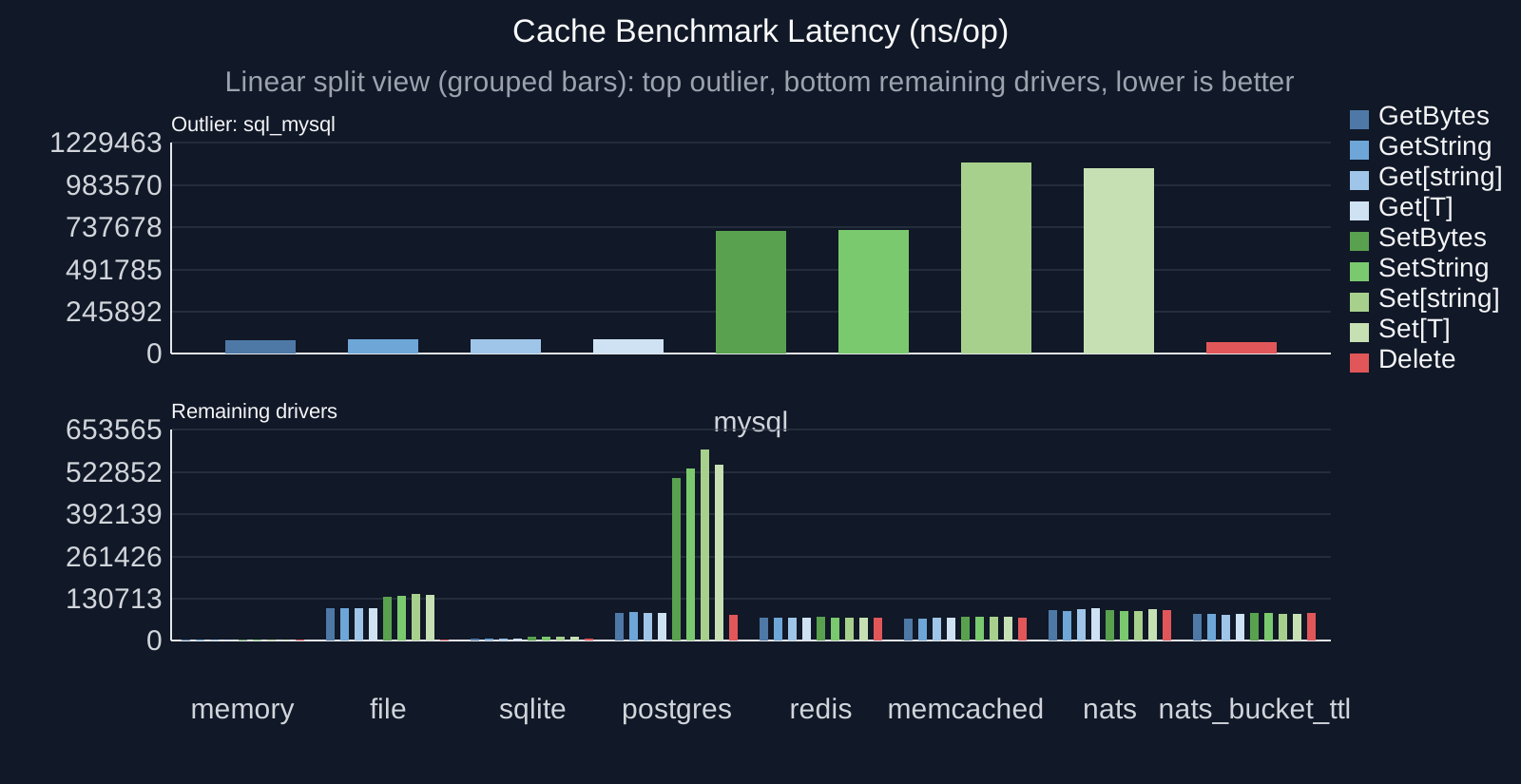
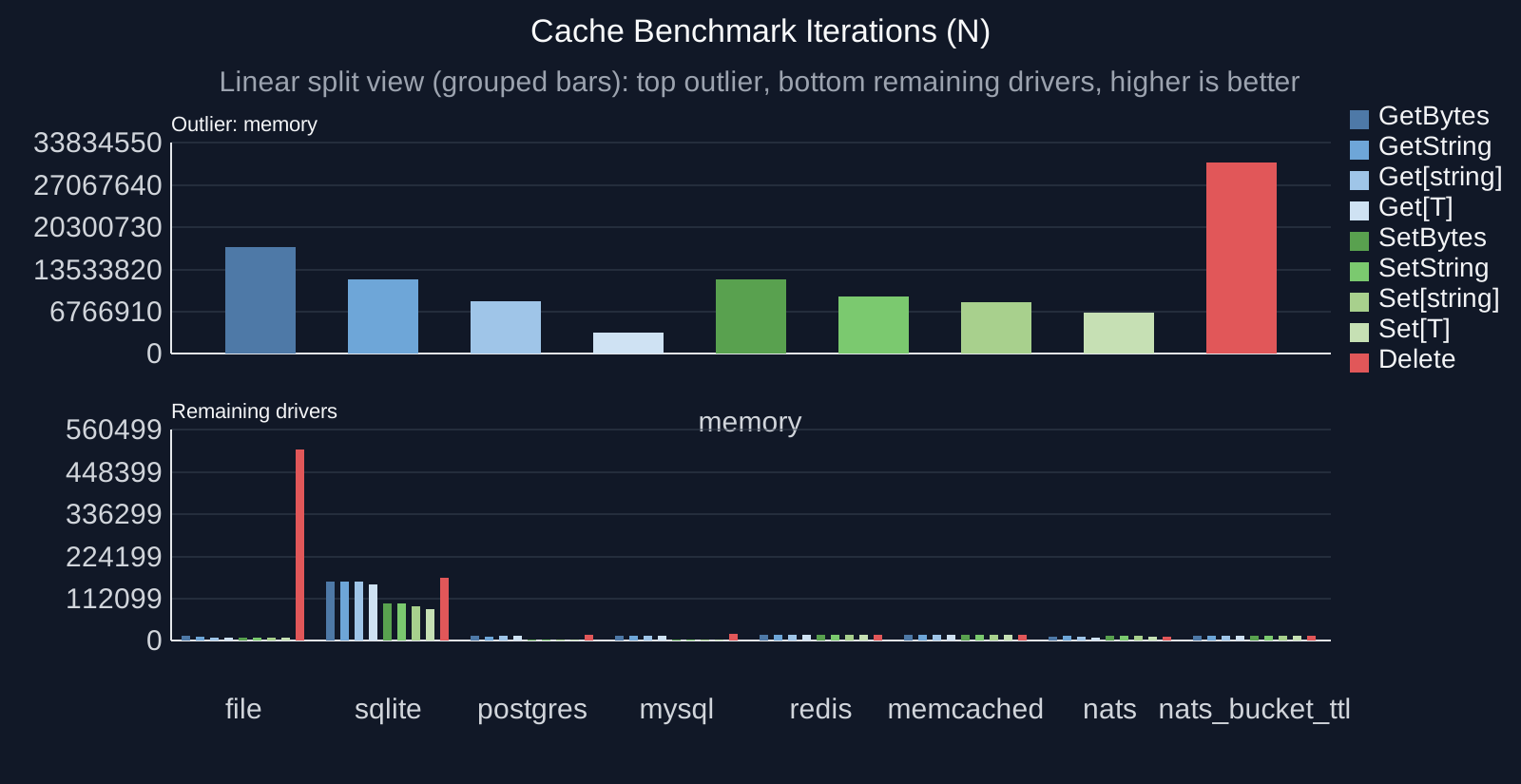
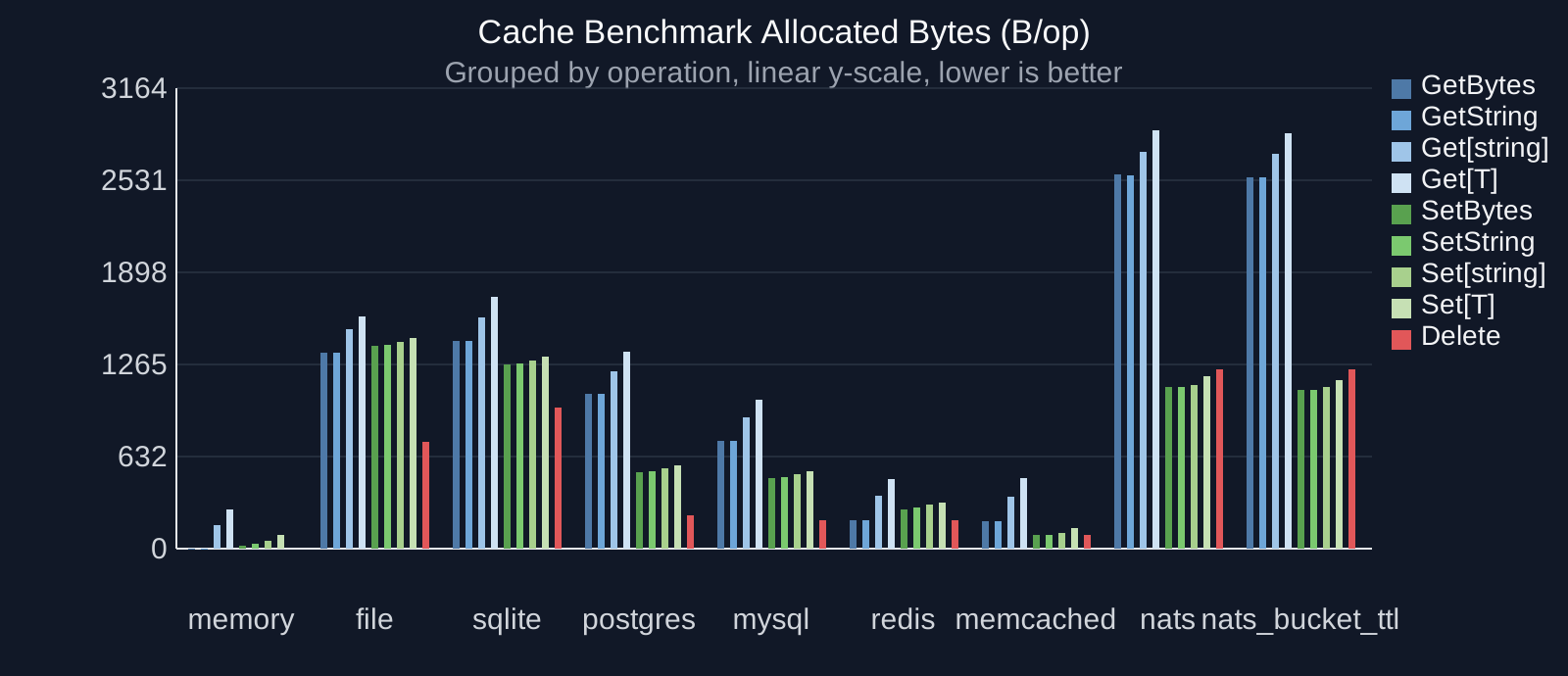
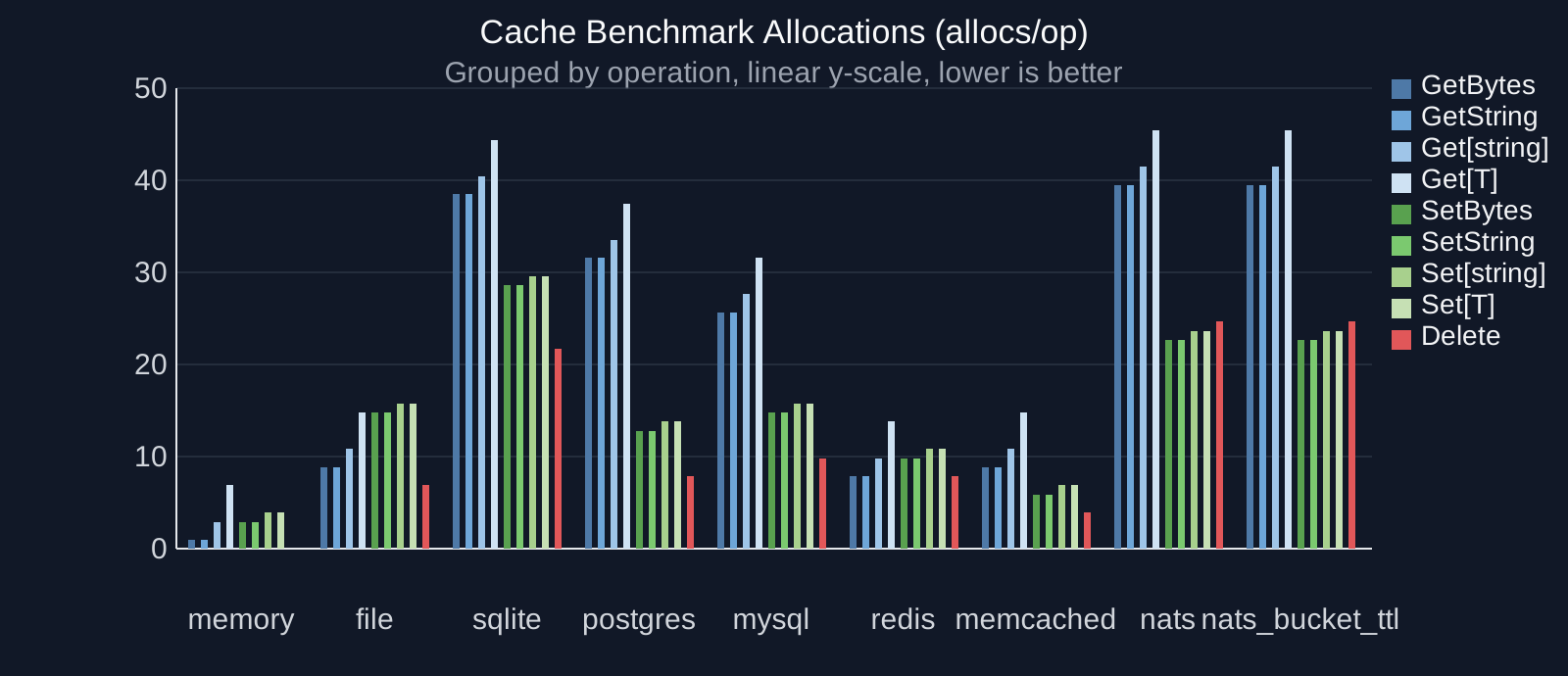
Benchmarks
cd docs
go test -tags benchrender ./bench -run TestRenderBenchmarks -count=1 -v
Note: NATS numbers can look slower than Redis/memory because the NATS driver preserves per-operation TTL semantics by storing per-key expiry metadata (envelope encode/decode) and may do extra compare/update steps for some operations. Generic helper benchmarks (Get[T] / Set[T]) use the default JSON codec, so compare them against GetBytes / SetBytes (and GetString / SetString) when evaluating convenience vs raw-path performance.
Note: DynamoDB is intentionally omitted from these local charts because emulator-based numbers are not representative of real AWS latency.
NATS variants in these charts:
nats: per-key TTL semantics using a binary envelope (magic/expiresAt/value). This preserves per-key expiry parity with other drivers, with modest metadata overhead.nats_bucket_ttl: bucket-level TTL mode (WithNATSBucketTTL(true)), raw value path; faster but different expiry semantics.
Latency (ns/op)
Iterations (N)
Allocated Bytes (B/op)
Allocations (allocs/op)
API reference
The API section below is autogenerated; do not edit between the markers. Many functions also provide ...Context variants that accept an explicit context.Context.
API Index
Examples assume ctx := context.Background() and c := cache.NewCache(cache.NewMemoryStore(ctx)) unless shown otherwise.
Constructors
NewFileStore
NewFileStore is a convenience for a filesystem-backed store.
ctx := context.Background()
store := cache.NewFileStore(ctx, "/tmp/my-cache")
fmt.Println(store.Driver()) // file
NewFileStoreWithConfig
NewFileStoreWithConfig builds a filesystem-backed store using explicit root config.
ctx := context.Background()
store := cache.NewFileStoreWithConfig(ctx, cache.StoreConfig{
	BaseConfig: cachecore.BaseConfig{
		EncryptionKey: []byte("01234567890123456789012345678901"),
		MaxValueBytes: 4096,
		Compression:   cache.CompressionGzip,
	},
	FileDir: "/tmp/my-cache",
})
fmt.Println(store.Driver()) // file
NewMemoryStore
NewMemoryStore is a convenience for an in-process store using defaults.
ctx := context.Background()
store := cache.NewMemoryStore(ctx)
fmt.Println(store.Driver()) // memory
NewMemoryStoreWithConfig
NewMemoryStoreWithConfig builds an in-process store using explicit root config.
ctx := context.Background()
store := cache.NewMemoryStoreWithConfig(ctx, cache.StoreConfig{
	BaseConfig: cachecore.BaseConfig{
		DefaultTTL:  30 * time.Second,
		Compression: cache.CompressionGzip,
	},
	MemoryCleanupInterval: 5 * time.Minute,
})
fmt.Println(store.Driver()) // memory
NewNullStore
NewNullStore is a no-op store useful for tests where caching should be disabled.
ctx := context.Background()
store := cache.NewNullStore(ctx)
fmt.Println(store.Driver()) // null
NewNullStoreWithConfig
NewNullStoreWithConfig builds a null store with shared wrappers (compression/encryption/limits).
ctx := context.Background()
store := cache.NewNullStoreWithConfig(ctx, cache.StoreConfig{
	BaseConfig: cachecore.BaseConfig{
		Compression:   cache.CompressionGzip,
		MaxValueBytes: 1024,
	},
})
fmt.Println(store.Driver()) // null
Core
Cache.WithContext
WithContext returns a derived cache handle that binds ctx to subsequent operations.
Driver
Driver reports the underlying store driver.
Inspector
Inspector returns the optional browsing interface for the underlying store.
ctx := context.Background()
c := cache.NewCache(cache.NewMemoryStore(ctx))
inspector, ok := c.Inspector()
fmt.Println(ok, inspector.Capabilities().CanList) // true true
NewCache
NewCache creates a cache facade bound to a concrete store. NewCache panics when store is nil because a cache cannot operate without its required backend.
ctx := context.Background()
s := cache.NewMemoryStore(ctx)
c := cache.NewCache(s)
fmt.Println(c.Driver()) // memory
NewCacheWithTTL
NewCacheWithTTL lets callers override the default TTL applied when ttl <= 0. NewCacheWithTTL panics when store is nil because accepting invalid wiring would defer failure to the first operation.
ctx := context.Background()
s := cache.NewMemoryStore(ctx)
c := cache.NewCacheWithTTL(s, 2*time.Minute)
fmt.Println(c.Driver(), c != nil) // memory true
Ready
Ready checks whether the underlying store is ready to serve requests.
ctx := context.Background()
c := cache.NewCache(cache.NewMemoryStore(ctx))
fmt.Println(c.Ready() == nil) // true
Store
Store returns the underlying store implementation.
ctx := context.Background()
c := cache.NewCache(cache.NewMemoryStore(ctx))
fmt.Println(c.Store().Driver()) // memory
Driver Configs
Optional backend config examples (compile-checked from generated examples and driver New(...) docs).
Shared cachecore.BaseConfig
Shared fields are embedded via cachecore.BaseConfig on every driver config:
DefaultTTL: defaults to5*time.Minutewhen zero in all optional driversPrefix: defaults to"app"when empty in all optional driversCompression: gzip writes a versioned CMP1 envelope; the zero value leaves bytes uncompressedMaxValueBytes: bounds writes and decoded reads;0disables the limitEncryptionKey: AES-GCM writes a versioned ENC1 envelope;nildisables encryptionIncrementandDecrement: bypass shaping so backend-native counters remain atomic
DynamoDB
Defaults:
- Region: "us-east-1" when empty
- Table: "cache_entries" when empty
- DefaultTTL: 5*time.Minute when zero
- Prefix: "app" when empty
- Client: auto-created when nil (uses Region and optional Endpoint)
- Endpoint: empty by default (normal AWS endpoint resolution)
ctx := context.Background()
store, err := dynamocache.New(ctx, dynamocache.Config{
	BaseConfig: cachecore.BaseConfig{
		DefaultTTL: 5 * time.Minute,
		Prefix:     "app",
	},
	Region: "us-east-1",
	Table:  "cache_entries",
})
if err != nil {
	panic(err)
}
fmt.Println(store.Driver()) // dynamo
Memcached
Defaults:
- Addresses: []string{"127.0.0.1:11211"} when empty
- DefaultTTL: 5*time.Minute when zero
- Prefix: "app" when empty
store := memcachedcache.New(memcachedcache.Config{
	BaseConfig: cachecore.BaseConfig{
		DefaultTTL: 5 * time.Minute,
		Prefix:     "app",
	},
	Addresses: []string{"127.0.0.1:11211"},
})
fmt.Println(store.Driver()) // memcached
MySQL
Defaults:
- DefaultTTL: 5*time.Minute when zero
- Prefix: "app" when empty
- Table: "cache_entries" when empty
- DSN: required
store, err := mysqlcache.New(mysqlcache.Config{
	BaseConfig: cachecore.BaseConfig{
		DefaultTTL: 5 * time.Minute,
		Prefix:     "app",
	},
	DSN:   "user:pass@tcp(127.0.0.1:3306)/app?parseTime=true",
	Table: "cache_entries",
})
if err != nil {
	panic(err)
}
fmt.Println(store.Driver()) // sql
NATS
Defaults:
- DefaultTTL: 5*time.Minute when zero
- Prefix: "app" when empty
- BucketTTL: false (TTL enforced in value envelope metadata)
- KeyValue: required for real operations (nil allowed, operations return errors)
var kv natscache.KeyValue // provided by your NATS setup
store := natscache.New(natscache.Config{
	BaseConfig: cachecore.BaseConfig{
		DefaultTTL: 5 * time.Minute,
		Prefix:     "app",
	},
	KeyValue:  kv,
	BucketTTL: false,
})
fmt.Println(store.Driver()) // nats
Postgres
Defaults:
- DefaultTTL: 5*time.Minute when zero
- Prefix: "app" when empty
- Table: "cache_entries" when empty
- DSN: required
store, err := postgrescache.New(postgrescache.Config{
	BaseConfig: cachecore.BaseConfig{
		DefaultTTL: 5 * time.Minute,
		Prefix:     "app",
	},
	DSN:   "postgres://user:pass@localhost:5432/app?sslmode=disable",
	Table: "cache_entries",
})
if err != nil {
	panic(err)
}
fmt.Println(store.Driver()) // sql
Redis
Defaults:
- DefaultTTL: 5*time.Minute when zero
- Prefix: "app" when empty
- Addr: empty by default (no client auto-created unless Addr is set)
- Client: optional advanced override (takes precedence when set)
- Client overrides must also implement Eval to use ownership-safe locking
- If neither Client nor Addr is set, operations return errors until a client is provided
store := rediscache.New(rediscache.Config{
	BaseConfig: cachecore.BaseConfig{
		DefaultTTL: 5 * time.Minute,
		Prefix:     "app",
	},
	Addr: "127.0.0.1:6379",
})
fmt.Println(store.Driver()) // redis
SQL Core (advanced/shared implementation)
Defaults:
- Table: "cache_entries" when empty
- DefaultTTL: 5*time.Minute when zero
- Prefix: "app" when empty
- DriverName: required
- DSN: required
store, err := sqlcore.New(sqlcore.Config{
	BaseConfig: cachecore.BaseConfig{
		DefaultTTL: 5 * time.Minute,
		Prefix:     "app",
	},
	DriverName: "sqlite",
	DSN:        "file::memory:?cache=shared",
	Table:      "cache_entries",
})
if err != nil {
	panic(err)
}
fmt.Println(store.Driver()) // sql
SQLite
Defaults:
- DefaultTTL: 5*time.Minute when zero
- Prefix: "app" when empty
- Table: "cache_entries" when empty
- DSN: required
store, err := sqlitecache.New(sqlitecache.Config{
	BaseConfig: cachecore.BaseConfig{
		DefaultTTL: 5 * time.Minute,
		Prefix:     "app",
	},
	DSN:   "file::memory:?cache=shared",
	Table: "cache_entries",
})
if err != nil {
	panic(err)
}
fmt.Println(store.Driver()) // sql
Invalidation
Cache.Pull
Pull returns a typed value for key and removes it, using the default codec (JSON).
type Token struct { Value string `json:"value"` }
ctx := context.Background()
c := cache.NewCache(cache.NewMemoryStore(ctx))
_ = c.Set("reset:token:42", Token{Value: "abc"}, time.Minute)
tok, ok, err := c.Pull[Token]("reset:token:42")
fmt.Println(err == nil, ok, tok.Value) // true true abc
Delete
Delete removes a single key.
ctx := context.Background()
c := cache.NewCache(cache.NewMemoryStore(ctx))
_ = c.SetBytes("a", []byte("1"), time.Minute)
fmt.Println(c.Delete("a") == nil) // true
DeleteMany
DeleteMany removes multiple keys.
ctx := context.Background()
c := cache.NewCache(cache.NewMemoryStore(ctx))
fmt.Println(c.DeleteMany("a", "b") == nil) // true
Flush
Flush clears all keys for this store scope.
ctx := context.Background()
c := cache.NewCache(cache.NewMemoryStore(ctx))
_ = c.SetBytes("a", []byte("1"), time.Minute)
fmt.Println(c.Flush() == nil) // true
Pull
Pull returns a typed value for key and removes it, using the default codec (JSON). It remains available for compatibility; new code can use Cache.Pull.
PullBytes
PullBytes returns value and removes it from cache.
ctx := context.Background()
c := cache.NewCache(cache.NewMemoryStore(ctx))
_ = c.SetString("reset:token:42", "abc", time.Minute)
body, ok, _ := c.PullBytes("reset:token:42")
fmt.Println(ok, string(body)) // true abc
Locking
Acquire
Acquire attempts to acquire the lock once (non-blocking).
ctx := context.Background()
c := cache.NewCache(cache.NewMemoryStore(ctx))
lock := c.NewLockHandle("job:sync", 10*time.Second)
locked, err := lock.Acquire()
fmt.Println(err == nil, locked) // true true
Block
Block waits up to timeout to acquire the lock, runs fn if acquired, then releases.
retryInterval <= 0 falls back to the cache default lock retry interval.
ctx := context.Background()
c := cache.NewCache(cache.NewMemoryStore(ctx))
lock := c.NewLockHandle("job:sync", 10*time.Second)
locked, err := lock.Block(500*time.Millisecond, 25*time.Millisecond, func() error {
	// do protected work
	return nil
})
fmt.Println(err == nil, locked) // true true
Lock
Lock waits until this Cache instance and the backend can begin a lock lifecycle or timeout elapses.
ctx := context.Background()
c := cache.NewCache(cache.NewMemoryStore(ctx))
locked, err := c.Lock("job:sync", 10*time.Second, time.Second)
fmt.Println(err == nil, locked) // true true
if locked {
	_ = c.Unlock("job:sync")
}
LockHandle.Get
Get acquires the lock once, runs fn if acquired, then releases automatically.
ctx := context.Background()
c := cache.NewCache(cache.NewMemoryStore(ctx))
lock := c.NewLockHandle("job:sync", 10*time.Second)
locked, err := lock.Get(func() error {
	// do protected work
	return nil
})
fmt.Println(err == nil, locked) // true true
NewLockHandle
NewLockHandle creates a reusable lock handle for a key/ttl pair.
ctx := context.Background()
c := cache.NewCache(cache.NewMemoryStore(ctx))
lock := c.NewLockHandle("job:sync", 10*time.Second)
locked, err := lock.Acquire()
fmt.Println(err == nil, locked) // true true
if locked {
	_ = lock.Release()
}
Release
Release unlocks the key if this handle previously acquired and still owns it.
It is safe to call multiple times; repeated calls become no-ops after the first successful release.
ctx := context.Background()
c := cache.NewCache(cache.NewMemoryStore(ctx))
lock := c.NewLockHandle("job:sync", 10*time.Second)
locked, _ := lock.Acquire()
if locked {
	_ = lock.Release()
}
TryLock
TryLock acquires a short-lived lock key when this Cache instance has no active lifecycle for it.
ctx := context.Background()
c := cache.NewCache(cache.NewMemoryStore(ctx))
locked, _ := c.TryLock("job:sync", 10*time.Second)
fmt.Println(locked) // true
if locked {
	_ = c.Unlock("job:sync")
}
Unlock
Unlock closes this Cache instance's lifecycle and releases the key only while it still owns the backend lock.
ctx := context.Background()
c := cache.NewCache(cache.NewMemoryStore(ctx))
locked, _ := c.TryLock("job:sync", 10*time.Second)
if locked {
	_ = c.Unlock("job:sync")
}
Memoization
NewMemoStore
NewMemoStore decorates store with per-process read memoization.
Behavior:
- First Get hits the backing store, clones the value, and memoizes it in-process.
- Subsequent Get for the same key returns the memoized clone (no backend call).
- Any write/delete/flush invalidates the memo entry so local reads stay in sync with changes made through this process.
- Successful mutations advance one bounded process generation. This can prevent an unrelated in-flight read from being memoized, but it does not evict unrelated hits.
- Memo data is per-process only; other processes or external writers will not invalidate it. Use only when that staleness window is acceptable.
- NewMemoStore panics when store is nil because the backing store is required.
ctx := context.Background()
base := cache.NewMemoryStore(ctx)
memo := cache.NewMemoStore(base)
c := cache.NewCache(memo)
fmt.Println(c.Driver()) // memory
Observability
OnCacheOp
OnCacheOp implements Observer.
obs := cache.ObserverFunc(func(ctx context.Context, event cache.CacheOpEvent) {
	fmt.Println(event.Operation, event.Key, event.Hit, event.Err == nil, event.Driver)
	_ = ctx
	_ = event.Duration
})
obs.OnCacheOp(context.Background(), cache.CacheOpEvent{Operation: "get", Key: "user:42", Hit: true, Duration: time.Millisecond, Driver: cachecore.DriverMemory})
WithObserver
WithObserver attaches an observer to receive operation events. WithObserver mutates c for backward compatibility and must be called during construction, before c is used concurrently. The observer must be safe for concurrent callbacks.
ctx := context.Background()
c := cache.NewCache(cache.NewMemoryStore(ctx))
c = c.WithObserver(cache.ObserverFunc(func(ctx context.Context, event cache.CacheOpEvent) {
	// See docs/production-guide.md for a real metrics recipe.
	fmt.Println(event.Operation, event.Driver, event.Hit, event.Err == nil)
	_ = ctx
	_ = event.Key
	_ = event.Duration
}))
_, _, _ = c.GetBytes("profile:42")
Other
LockHandle.WithContext
WithContext returns a derived handle that shares lock ownership state with l.
Rate Limiting
RateLimit
RateLimit increments a fixed-window counter and returns allowance metadata.
ctx := context.Background()
c := cache.NewCache(cache.NewMemoryStore(ctx))
res, err := c.RateLimit("rl:api:ip:1.2.3.4", 100, time.Minute)
fmt.Println(err == nil, res.Allowed, res.Count, res.Remaining, !res.ResetAt.IsZero())
// Output: true true 1 99 true
Read Through
Cache.Remember
Remember is the ergonomic, typed remember helper using JSON encoding by default.
type Profile struct { Name string `json:"name"` }
ctx := context.Background()
c := cache.NewCache(cache.NewMemoryStore(ctx))
profile, err := c.Remember("profile:42", time.Minute, func() (Profile, error) {
	return Profile{Name: "Ada"}, nil
})
fmt.Println(err == nil, profile.Name) // true Ada
Cache.RememberStale
RememberStale returns a typed value with stale fallback semantics using JSON encoding by default.
type Profile struct { Name string `json:"name"` }
ctx := context.Background()
c := cache.NewCache(cache.NewMemoryStore(ctx))
profile, usedStale, err := c.RememberStale("profile:42", time.Minute, 10*time.Minute, func() (Profile, error) {
	return Profile{Name: "Ada"}, nil
})
fmt.Println(err == nil, usedStale, profile.Name) // true false Ada
Remember
Remember is the ergonomic, typed remember helper using JSON encoding by default. It remains available for compatibility; new code can use Cache.Remember.
RememberBytes
RememberBytes returns key value or computes/stores it when missing.
ctx := context.Background()
c := cache.NewCache(cache.NewMemoryStore(ctx))
data, err := c.RememberBytes("dashboard:summary", time.Minute, func() ([]byte, error) {
	return []byte("payload"), nil
})
fmt.Println(err == nil, string(data)) // true payload
RememberStale
RememberStale returns a typed value with stale fallback semantics using JSON encoding by default. It remains available for compatibility; new code can use Cache.RememberStale.
RememberStaleBytes
RememberStaleBytes returns a fresh value when available, otherwise computes and caches it. If computing fails and a stale value exists, it returns the stale value. The returned bool is true when a stale fallback was used.
ctx := context.Background()
c := cache.NewCache(cache.NewMemoryStore(ctx))
body, usedStale, err := c.RememberStaleBytes("profile:42", time.Minute, 10*time.Minute, func() ([]byte, error) {
	return []byte(`{"name":"Ada"}`), nil
})
fmt.Println(err == nil, usedStale, len(body) > 0)
Reads
BatchGetBytes
BatchGetBytes returns all found values for the provided keys. Missing keys are omitted from the returned map.
ctx := context.Background()
c := cache.NewCache(cache.NewMemoryStore(ctx))
_ = c.SetBytes("a", []byte("1"), time.Minute)
_ = c.SetBytes("b", []byte("2"), time.Minute)
values, err := c.BatchGetBytes("a", "b", "missing")
fmt.Println(err == nil, string(values["a"]), string(values["b"])) // true 1 2
Cache.Get
Get returns a typed value for key using the default codec (JSON) when present.
type Profile struct { Name string `json:"name"` }
ctx := context.Background()
c := cache.NewCache(cache.NewMemoryStore(ctx))
_ = c.Set("profile:42", Profile{Name: "Ada"}, time.Minute)
_ = c.Set("settings:mode", "dark", time.Minute)
profile, ok, err := c.Get[Profile]("profile:42")
mode, ok2, err2 := c.Get[string]("settings:mode")
fmt.Println(err == nil, ok, profile.Name, err2 == nil, ok2, mode) // true true Ada true true dark
Cache.GetJSON
GetJSON decodes a JSON value into T when key exists.
type Profile struct { Name string `json:"name"` }
ctx := context.Background()
c := cache.NewCache(cache.NewMemoryStore(ctx))
_ = c.SetJSON("profile:42", Profile{Name: "Ada"}, time.Minute)
profile, ok, err := c.GetJSON[Profile]("profile:42")
fmt.Println(err == nil, ok, profile.Name) // true true Ada
Get
Get returns a typed value for key using the default codec (JSON) when present. It remains available for compatibility; new code can use Cache.Get.
GetBytes
GetBytes returns raw bytes for key when present.
ctx := context.Background()
s := cache.NewMemoryStore(ctx)
c := cache.NewCache(s)
_ = c.SetBytes("user:42", []byte("Ada"), 0)
value, ok, _ := c.GetBytes("user:42")
fmt.Println(ok, string(value)) // true Ada
GetJSON
GetJSON decodes a JSON value into T when key exists. It remains available for compatibility; new code can use Cache.GetJSON.
GetString
GetString returns a UTF-8 string value for key when present.
ctx := context.Background()
c := cache.NewCache(cache.NewMemoryStore(ctx))
_ = c.SetString("user:42:name", "Ada", 0)
name, ok, _ := c.GetString("user:42:name")
fmt.Println(ok, name) // true Ada
ListPage
ListPage lists cache entries from an inspector-capable store.
ctx := context.Background()
c := cache.NewCache(cache.NewMemoryStore(ctx))
_ = c.SetString("profile:1", "Ada", time.Minute)
_ = c.SetString("profile:2", "Grace", time.Minute)
page, _ := cache.ListPage(ctx, c, cachecore.ListPageOptions{
	Query: "profile:",
	Limit: 10,
})
fmt.Println(len(page.Entries), page.Entries[0].Key) // 2 profile:1
Refresh Ahead
Cache.RefreshAhead
RefreshAhead returns a typed value and refreshes asynchronously when near expiry.
type Summary struct { Text string `json:"text"` }
ctx := context.Background()
c := cache.NewCache(cache.NewMemoryStore(ctx))
s, err := c.RefreshAhead("dashboard:summary", time.Minute, 10*time.Second, func() (Summary, error) {
	return Summary{Text: "ok"}, nil
})
fmt.Println(err == nil, s.Text) // true ok
Cache.RefreshAheadValueWithCodec
RefreshAheadValueWithCodec allows custom encoding/decoding for typed refresh-ahead operations.
ctx := context.Background()
c := cache.NewCache(cache.NewMemoryStore(ctx))
codec := cache.ValueCodec[string]{
	Encode: func(value string) ([]byte, error) { return []byte(value), nil },
	Decode: func(body []byte) (string, error) { return string(body), nil },
}
value, err := c.RefreshAheadValueWithCodec("status", time.Minute, 10*time.Second, func() (string, error) {
	return "ready", nil
}, codec)
fmt.Println(err == nil, value)
// true ready
RefreshAhead
RefreshAhead returns a typed value and refreshes asynchronously when near expiry. It remains available for compatibility; new code can use Cache.RefreshAhead.
RefreshAheadBytes
RefreshAheadBytes returns cached value immediately and refreshes asynchronously when near expiry. On miss, it computes and stores synchronously.
ctx := context.Background()
c := cache.NewCache(cache.NewMemoryStore(ctx))
body, err := c.RefreshAheadBytes("dashboard:summary", time.Minute, 10*time.Second, func() ([]byte, error) {
	return []byte("payload"), nil
})
fmt.Println(err == nil, len(body) > 0) // true true
RefreshAheadValueWithCodec
RefreshAheadValueWithCodec allows custom encoding/decoding for typed refresh-ahead operations. It remains available for compatibility; new code can use Cache.RefreshAheadValueWithCodec.
Testing Helpers
AssertCalled
AssertCalled verifies key was touched by op the expected number of times.
f := cachefake.New()
c := f.Cache()
_ = c.SetString("settings:mode", "dark", 0)
t := &testing.T{}
f.AssertCalled(t, cachefake.OpSet, "settings:mode", 1)
AssertNotCalled
AssertNotCalled ensures key was never touched by op.
f := cachefake.New()
t := &testing.T{}
f.AssertNotCalled(t, cachefake.OpDelete, "settings:mode")
AssertTotal
AssertTotal ensures the total call count for an op matches times.
f := cachefake.New()
c := f.Cache()
_ = c.Delete("a")
_ = c.Delete("b")
t := &testing.T{}
f.AssertTotal(t, cachefake.OpDelete, 2)
Cache
Cache returns the cache facade to inject into code under test.
f := cachefake.New()
c := f.Cache()
_, _, _ = c.GetBytes("settings:mode")
Count
Count returns calls for op+key.
f := cachefake.New()
c := f.Cache()
_ = c.SetString("settings:mode", "dark", 0)
n := f.Count(cachefake.OpSet, "settings:mode")
_ = n
New
New creates a Fake using an in-memory store.
f := cachefake.New()
c := f.Cache()
_ = c.SetString("settings:mode", "dark", 0)
Reset
Reset clears recorded counts.
f := cachefake.New()
_ = f.Cache().SetString("settings:mode", "dark", 0)
f.Reset()
Total
Total returns total calls for an op across keys.
f := cachefake.New()
c := f.Cache()
_ = c.Delete("a")
_ = c.Delete("b")
n := f.Total(cachefake.OpDelete)
_ = n
Writes
Add
Add writes value only when key is not already present.
ctx := context.Background()
c := cache.NewCache(cache.NewMemoryStore(ctx))
created, _ := c.Add("boot:seeded", []byte("1"), time.Hour)
fmt.Println(created) // true
BatchSetBytes
BatchSetBytes writes many key/value pairs using a shared ttl.
ctx := context.Background()
c := cache.NewCache(cache.NewMemoryStore(ctx))
err := c.BatchSetBytes(map[string][]byte{
	"a": []byte("1"),
	"b": []byte("2"),
}, time.Minute)
fmt.Println(err == nil) // true
Cache.Set
Set encodes value with the default codec (JSON) and writes it to key.
type Settings struct { Enabled bool `json:"enabled"` }
ctx := context.Background()
c := cache.NewCache(cache.NewMemoryStore(ctx))
err := c.Set("settings:alerts", Settings{Enabled: true}, time.Minute)
err2 := c.Set("settings:mode", "dark", time.Minute)
fmt.Println(err == nil, err2 == nil) // true true
Cache.SetJSON
SetJSON encodes value as JSON and writes it to key.
type Settings struct { Enabled bool `json:"enabled"` }
ctx := context.Background()
c := cache.NewCache(cache.NewMemoryStore(ctx))
err := c.SetJSON("settings:alerts", Settings{Enabled: true}, time.Minute)
fmt.Println(err == nil) // true
Decrement
Decrement decrements a numeric value and returns the result.
ctx := context.Background()
c := cache.NewCache(cache.NewMemoryStore(ctx))
val, _ := c.Decrement("rate:login:42", 1, time.Minute)
fmt.Println(val) // -1
Increment
Increment increments a numeric value and returns the result.
ctx := context.Background()
c := cache.NewCache(cache.NewMemoryStore(ctx))
val, _ := c.Increment("rate:login:42", 1, time.Minute)
fmt.Println(val) // 1
Set
Set encodes value with the default codec (JSON) and writes it to key. It remains available for compatibility; new code can use Cache.Set.
SetBytes
SetBytes writes raw bytes to key.
ctx := context.Background()
c := cache.NewCache(cache.NewMemoryStore(ctx))
fmt.Println(c.SetBytes("token", []byte("abc"), time.Minute) == nil) // true
SetJSON
SetJSON encodes value as JSON and writes it to key. It remains available for compatibility; new code can use Cache.SetJSON.
SetString
SetString writes a string value to key.
ctx := context.Background()
c := cache.NewCache(cache.NewMemoryStore(ctx))
fmt.Println(c.SetString("user:42:name", "Ada", time.Minute) == nil) // true
Payload size caps (effective bytes written)
| Driver | Hard / default cap | Configurable | Notes |
|---|---|---|---|
| Null | N/A | N/A | No persistence. |
| Memory | Process memory | - | No backend hard cap. |
| File | Disk / filesystem | - | No backend hard cap. |
| Redis | Backend practical (memory/SLO) | Server-side | No commonly hit low per-value hard cap in app use. |
| NATS | Server/bucket payload limits | Server-side | Depends on NATS/JetStream config. |
| Memcached | ~1 MiB per item (default) | ✓ (server -I) | Backend-enforced item limit. |
| DynamoDB | 400 KB item hard cap | No | Includes key/metadata overhead, so usable value bytes are lower. |
| SQL | DB/engine config dependent | Server-side | Blob/row/packet limits vary by engine and deployment. |
StoreConfig.MaxValueBytes (root-backed stores) is the uniform application-level cap, and it applies to post-shaping bytes (after compression/encryption overhead).
Integration Coverage
| Area | What is validated | Scope |
|---|---|---|
| Core store contract | Set/Get, TTL expiry, Add, counters, Delete/DeleteMany, Flush, typed Remember | All drivers |
| Option contracts | prefix, compression, encryption, prefix+compression+encryption, max_value_bytes, default_ttl | All drivers (per option case) |
| Locking | single-winner contention, timeout/cancel, TTL expiry reacquire, unlock safety | All drivers |
| Rate limiting | monotonic counts, remaining >= 0, window rollover reset | All drivers |
| Refresh-ahead | miss/hit behavior, async refresh success/error, malformed metadata handling | All drivers |
| Remember stale | stale fallback semantics, TTL interactions, stale/fresh independent expiry, joined errors | All drivers |
| Batch ops | partial misses, empty input behavior, default TTL application | All drivers |
| Counter semantics | signed deltas, zero delta, TTL refresh extension | All drivers |
| Context cancellation | GetContext/SetContext/LockContext/RefreshAheadContext/Remember*Ctx prompt return + driver-aware cancel semantics | All drivers (driver-aware assertions) |
| Latency / transient faults | injected slow Get/Add/Increment, timeout propagation, no hidden retries for RefreshAhead/Remember*/LockContext/RateLimit* | All drivers (integration wrappers over real stores) |
| Prefix isolation | Delete/Flush isolation + helper-generated keys (__lock:, :__refresh_exp, :__stale, rate-limit buckets) | Shared/prefixed backends |
| Payload shaping / corruption | compression+encryption round-trips, corrupted compressed/encrypted payload errors | Shared/persistent backends |
| Payload size limits | large binary payload round-trips; backend-specific near/over-limit checks (Memcached, DynamoDB) | Driver-specific where meaningful |
| Cross-store scope | shared vs local semantics across store instances (e.g. rate-limit counters) | Driver-specific expectations |
| Backend fault / recovery | backend restart mid-suite, outage errors, post-recovery round-trip/lock/refresh/stale flows | Container-backed drivers (runs automatically when container-backed fixtures are selected) |
| Observer metadata | op names, hit/miss flags, propagated errors, driver labels | Unit contract tests (integration helper paths exercise emissions indirectly) |
| Memo store caveats | per-process memoization, local-only invalidation, cross-process staleness behavior | Unit tests |
Default integration runs cover the contract suite above. Fault/recovery restart tests run automatically when the selected integration suite includes container-backed fixtures.
Development
Use make test for root-module tests, make vet for static checks, make generate to refresh generated documentation, and make test-integration for the separate integration module. Pass a driver such as make test-integration sqlitecache to narrow the matrix. Integration tests may require local services. Driver, docs, examples, and integration directories are independent Go modules; test each changed module from its directory.
README updates
README content is a mix of generated sections and manual sections.
- API reference (
<!-- api:embed:start --> ... <!-- api:embed:end -->) is generated. - Test badges are updated separately.
- Sections like driver notes and the integration coverage table are manual.
Update generated API docs
go run ./docs/readme/main.goUpdate test badges
Static counts (fast, watcher-friendly; counts top-level Test* funcs):
go run ./docs/readme/main.goExecuted counts (runs tests and counts real go test -json test/subtest starts):
CACHE_LOCAL_SIBLINGS=1 go run ./docs/readme/testcounts/main.goThe local-sibling mode uses go.work while a coordinated release is still untagged. Omit it to verify the published module boundary after all sibling tags are available.
Watch mode
make docs-watchNotes:
- The badge watcher runs real tests, so it is slower than API/example regeneration.
- Fault/recovery integration tests run with the integration suite when container-backed fixtures are selected.
Using with GoForj
GoForj Apps expose named caches through generated accessors. Use those accessors in application services and keep backend selection in cache configuration.
For the App workflow, see Cache Patterns.